Categories
BOOK REVIEWS

The Richest Man in Babylon Review and Summary

A Richest Man in Babylon review and summary: George Clason's timeless money principles told through simple ancient parables.
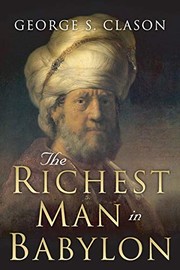
The Richest Man in Babylon by George S. Clason book cover

★★★★½4.6/5

The verdict: The money basics, in parables, in an afternoon.

🎧 Listen free on Audible
Try Kindle Unlimited
Buy the paperback

⚡ Quick answerThe Richest Man in Babylon by George S. Clason gets 4.6/5 from me. The money basics, in parables, in an afternoon. Anyone starting out with money, or who never learned the basics.

What is The Richest Man in Babylon about?

Clason teaches the fundamentals of personal finance through a set of parables set in ancient Babylon. The lessons, pay yourself first, live below your means, make money work for you, are simple, old and still true.

The Richest Man in Babylon summary

The book is a collection of short parables set in ancient Babylon, following characters who learn, and teach, the basic laws of building wealth. The most famous, the richest man in Babylon, shares how a humble scribe became the wealthiest man in the city.

The lessons are deliberately simple and repeated across the stories. Pay yourself first: save at least a tenth of everything you earn before anything else. Live below your means and control your spending. Make your savings work by investing them wisely, and guard them against loss. Seek advice only from those competent to give it. Improve your ability to earn. None of it is complicated, and that is the point; the parable format makes timeless principles memorable.

Because it dates from the 1920s and uses old-fashioned, biblical-sounding language, it has a distinctive style. But it is short, readable in an afternoon, and covers the foundations of personal finance more clearly than many modern books manage in far more pages.

First published in 1926, it has sold millions and remained a recommended primer on personal finance for a century. It is aimed at anyone who wants the timeless basics of money in a simple, memorable form.

The one idea worth the price: Pay yourself first. Save a tenth of everything you earn before you spend a penny of the rest, and never break the habit.

Key ideas and takeaways

  • Pay yourself first. Save at least a tenth of all you earn, always.
  • Live below your means. Control spending so there is always something to save.
  • Make money work. Invest savings wisely so they earn for you.
  • Guard your wealth. Protect your money and take advice only from the competent.

My honest take

This is the book to hand your younger self, or anyone starting out. It strips personal finance back to a handful of laws that have not changed in a hundred years, and delivers them in a form you actually remember, because they are stories rather than spreadsheets.

Pay yourself first is the one that matters most, and it is worth the entry price alone. For the self-employed, whose income is irregular and whose saving is easily neglected, that single discipline, taking a slice off the top before anything else, is the foundation everything else sits on. It is short, gentle and timeless, and I still recommend it decades after first reading it.

The old-fashioned language is either charming or grating depending on your taste, and it takes a chapter to settle into. But do not mistake simplicity for shallowness; these are the foundations, and most people who struggle with money have simply never applied them.

The honest caveat: The archaic, parable style will not suit everyone, and it covers foundations rather than anything advanced. If you already have the basics down, it will feel too simple.

Where it falls short

  • The old-fashioned language takes some getting used to.
  • It covers only the fundamentals, so experienced savers will find little new.

How it compares

I Will Teach You to Be Rich is the modern, tactical version; The Richest Man in Babylon is the timeless foundation beneath it. Read Clason for the principles and Sethi for the current system.

Who should read it (and who should skip it)

Anyone starting out with money, or who never learned the basics. Skip it if your financial foundations are already solid.

Best format: Audio or Kindle; it is short and the parables listen well. Often free or cheap as a classic.

How to actually use it if you are self-employed

  • Set up an automatic transfer of at least ten percent of income to savings.
  • List where your money leaks and cut one thing to live below your means.
  • Move idle savings somewhere they can earn rather than sitting still.
⚡ The 60-second recap

  • Pay yourself first, always.
  • Live below your means.
  • Make your money work and guard it.
A book is a shortcut. A second pair of eyes is faster.

Twenty years self-employed, 500+ people coached. If you want help applying this to your own situation, book a free discovery call.

Book a free discovery call

Frequently asked questions

Is it still relevant?

Yes. The principles, pay yourself first, live below your means, are timeless, even if the language is old.

Is it hard to read?

No, it is short and simple, though the old-fashioned, parable style takes a chapter to settle into.

What is the main lesson?

Pay yourself first: save at least a tenth of everything you earn before spending the rest.

Is there a free version?

As a very old classic it is often free or very cheap, and frequently on Kindle Unlimited.

Is it too basic?

If you already have the fundamentals, yes. It is best for people building the foundations.

Final verdict

The Richest Man in Babylon earns 4.6/5. The money basics, in parables, in an afternoon. If it is the stage you are at, the cheapest way in is a free Audible trial or Kindle Unlimited.

Disclosure: Some links in this article are affiliate links. If you buy through them I may earn a small commission, at no extra cost to you. Star ratings are my own editorial scores.
Categories
BOOK REVIEWS

I Will Teach You to Be Rich Review and Summary

An I Will Teach You to Be Rich review and summary: Ramit Sethi's practical six-week system for automating your finances and spending guilt-free on what you love.

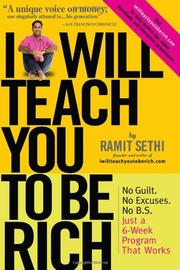
I Will Teach You to Be Rich by Ramit Sethi book cover

★★★★½4.6/5

The verdict: A no-nonsense system for automating your money so you can stop thinking about it.

🎧 Listen free on Audible
Try Kindle Unlimited
Buy the paperback

⚡ Quick answerI Will Teach You to Be Rich by Ramit Sethi gets 4.6/5 from me. A no-nonsense system for automating your money so you can stop thinking about it. Anyone who earns reasonably but never gets round to organising their money.

What is I Will Teach You to Be Rich about?

Sethi gives a practical, six-week programme for sorting your money: cutting fees, automating savings and bills, and setting things up so your finances largely run themselves, leaving you free to spend on what you actually enjoy.

I Will Teach You to Be Rich summary

Sethi's approach is deliberately unglamorous and systems-based. Rather than preaching frugality, he argues you should cut costs mercilessly on the things you do not care about so you can spend freely on the things you do, what he calls conscious spending.

The book is structured as a six-week action plan. It walks through optimising credit cards and bank accounts, beating fees, opening the right savings and investment accounts, and then the centrepiece: automating the whole system so money flows to bills, savings and investments the moment you are paid. He is a strong advocate of low-cost index investing and of not agonising over small decisions, arguing that getting the big things automated matters far more than fretting over a coffee.

The updated edition brings the specifics current. The tone is brash and funny, aimed at a younger audience, but underneath it is one of the most genuinely actionable personal-finance systems around, with a useful section for freelancers and irregular income.

First published in 2009 and substantially updated in 2019, it became a modern personal-finance staple aimed at a younger generation. It is aimed at people who want their money organised without becoming obsessed with budgeting.

The one idea worth the price: Automate the boring big decisions once, so your money sorts itself every month and you can spend guilt-free on what you love.

Key ideas and takeaways

  • Conscious spending. Cut hard on what you do not value so you can spend freely on what you do.
  • Automate everything. Set money to flow to bills, savings and investing automatically.
  • Big wins over small guilt. Sorting the big things beats agonising over a coffee.
  • Invest simply. Low-cost index funds beat trying to be clever.

My honest take

This is the most practical money book on the list, and the one to reach for once The Psychology of Money has sorted your head out. Where Housel gives you the mindset, Sethi gives you the actual steps: which accounts, in what order, automated how.

The automation idea is the killer. Set your money to move itself the day you are paid, and you remove willpower from the equation entirely. For the self-employed, whose income is irregular and whose finances are easy to ignore, the section on handling variable income alone earns it a spot. The tone is loud and American, but the system underneath is genuinely useful.

The conscious-spending idea deserves special mention because it removes the guilt so many people carry. You are allowed to spend generously on what you love, provided you are ruthless on what you do not. That balance is healthier than the deprivation most money books push.

The honest caveat: The tone is brash and aimed at a younger, American audience, and some account specifics need translating for the UK. The system and principles carry across fine.

Where it falls short

  • The specific accounts and products are US-focused, so UK readers adapt them.
  • The loud, jokey tone will not suit everyone, especially older readers.

How it compares

The Psychology of Money sorts your mindset; I Will Teach You to Be Rich gives you the step-by-step system to act on it. Read Housel first, then Sethi to actually set things up.

Who should read it (and who should skip it)

Anyone who earns reasonably but never gets round to organising their money. Skip it if your finances are already automated and optimised.

Best format: Kindle or paper, because you will want to work through the six-week plan.

How to actually use it if you are self-employed

  • Set up automatic transfers to savings and tax the day you are paid.
  • List what you love spending on and what you do not, then cut the second hard.
  • Check the fees on your accounts and cards and kill the worst ones.
⚡ The 60-second recap

  • Cut hard on what you do not value, spend freely on what you do.
  • Automate money the day you are paid.
  • Keep investing simple with low-cost funds.
A book is a shortcut. A second pair of eyes is faster.

Twenty years self-employed, 500+ people coached. If you want help applying this to your own situation, book a free discovery call.

Book a free discovery call

Frequently asked questions

Is it UK-friendly?

The principles are, but the specific accounts and products are US-based, so you adapt those to UK equivalents.

Is it about being frugal?

No. It is about conscious spending: cutting hard on what you do not value so you can spend freely on what you do.

Is it good for freelancers?

Yes. The updated edition has a solid section on managing irregular, self-employed income.

Which edition should I read?

The updated 2019 edition, which brings the specifics current.

Do I need investing knowledge?

No. It walks you through simple, low-cost investing from scratch.

Final verdict

I Will Teach You to Be Rich earns 4.6/5. A no-nonsense system for automating your money so you can stop thinking about it. If it is the stage you are at, the cheapest way in is a free Audible trial or Kindle Unlimited.

Disclosure: Some links in this article are affiliate links. If you buy through them I may earn a small commission, at no extra cost to you. Star ratings are my own editorial scores.
Categories
BOOK REVIEWS

The Psychology of Money Review and Summary

A Psychology of Money review and summary: Morgan Housel on why doing well with money is about behaviour, not intelligence.

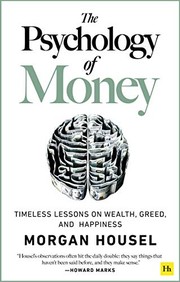
The Psychology of Money by Morgan Housel book cover

★★★★½4.7/5

The verdict: The rare money book about behaviour, not spreadsheets, and it is superb.

🎧 Listen free on Audible
Try Kindle Unlimited
Buy the paperback

⚡ Quick answerThe Psychology of Money by Morgan Housel gets 4.7/5 from me. The rare money book about behaviour, not spreadsheets, and it is superb. Everyone, but especially the self-employed with irregular income and an anxious relationship with money.

What is The Psychology of Money about?

Housel argues that financial success has less to do with how much you know and more to do with how you behave. Through nineteen short stories, he explores the psychology behind how people handle money.

The Psychology of Money summary

Housel's central idea is that money is not a hard science governed by formulas but a soft skill, where how you behave matters more than what you know. A genius who loses control of their emotions can be a financial disaster, while an ordinary person with patience and discipline can do very well.

The book is a set of nineteen largely standalone chapters, each making one point through a story. He covers the role of luck and risk, the power of compounding and why we underrate it, the difference between being rich and being wealthy, the value of enough and knowing when to stop, and why saving is more about humility and freedom than income. A recurring theme is that reasonable decisions you can stick with beat optimal ones you cannot.

Because the chapters are short and story-led, it is an easy, pleasant read that still leaves you with ideas you keep coming back to. It is less about what to do with money and more about how to think about it.

Published in 2020, it became a word-of-mouth bestseller and one of the most recommended money books of recent years. It is aimed at anyone who wants to think more clearly about money, regardless of how much they have.

The one idea worth the price: Doing well with money is mostly about behaviour, not brains. Reasonable decisions you can stick to beat perfect ones you cannot.

Key ideas and takeaways

  • Behaviour over brains. Temperament matters more than intelligence with money.
  • The power of enough. Knowing when you have enough prevents ruinous risk.
  • Compounding is underrated. The biggest gains come from time and patience.
  • Reasonable beats optimal. A plan you can stick to wins over a perfect one you abandon.

My honest take

This is my favourite money book on the list, and the one I would hand to almost anyone. It sidesteps the usual spreadsheets and instead deals with the real reason people struggle with money, which is behaviour, emotion and story.

Housel writes beautifully and the short chapters make it a genuine pleasure to read. The ideas stick: the value of enough, the danger of moving the goalposts, the quiet power of patience. For the self-employed, whose income is lumpy and whose relationship with money is often fraught, it is grounding in a way few finance books manage. I reread bits of it regularly.

There is not much to criticise, other than that it is deliberately about principles rather than specific tactics. If you want to know which account to open or which fund to buy, this is not that book, and it is better for it.

The honest caveat: It is about mindset and principles, not specific tactics, so it will not tell you exactly what to invest in or how. That is by design, but worth knowing.

Where it falls short

  • Deliberately light on concrete, do-this financial steps.
  • A couple of chapters cover similar ground, though the quality stays high.

How it compares

Where Rich Dad Poor Dad is the blunt wake-up call, The Psychology of Money is the wiser, calmer follow-up. Read Kiyosaki for the jolt and Housel for the wisdom.

Who should read it (and who should skip it)

Everyone, but especially the self-employed with irregular income and an anxious relationship with money. Hard to think of who should skip it.

Best format: Audio is excellent, as the short stories carry beautifully, though Kindle is nice for noting the lines you will want to keep.

How to actually use it if you are self-employed

  • Define what enough looks like for you, so you know when to stop taking risks.
  • Automate saving a fixed share of irregular income.
  • Judge financial decisions by whether you can stick to them, not whether they are optimal.
⚡ The 60-second recap

  • Behaviour beats intelligence with money.
  • Know your enough and protect it.
  • Let compounding and patience do the work.
A book is a shortcut. A second pair of eyes is faster.

Twenty years self-employed, 500+ people coached. If you want help applying this to your own situation, book a free discovery call.

Book a free discovery call

Frequently asked questions

Is it a how-to money book?

No. It is about behaviour and mindset rather than specific tactics, which is what makes it stand out.

Do I need finance knowledge to read it?

None at all. It is written in plain language through stories anyone can follow.

Why is it so highly recommended?

Because it addresses the real reason people struggle with money, behaviour, rather than just the maths.

Is the audiobook good?

Yes, the short story-led chapters work very well on audio.

What should I read alongside it?

Profit First for a practical system, or The Richest Man in Babylon for the timeless basics.

Final verdict

The Psychology of Money earns 4.7/5. The rare money book about behaviour, not spreadsheets, and it is superb. If it is the stage you are at, the cheapest way in is a free Audible trial or Kindle Unlimited.
Disclosure: Some links in this article are affiliate links. If you buy through them I may earn a small commission, at no extra cost to you. Star ratings are my own editorial scores.
Categories
BUSINESS TIPS HOW TO MAKE MONEY ONLINE

6 Money Making Mistakes Freelancers And The Self-employed Make

Perhaps you’ve recently considered leaving your full-time job to undertake a new challenge in your career. From freelancing, or even turning your side hustle into a full-time gig, there are various reasons so many people have recently decided to permanently quit the workforce.

Due – Due

While self-employment does offer better flexibility in your schedule, the ability to be your boss, and having the relaxation to work from home, it’s no wonder more than four million people were seen quitting their jobs during January 2020.

Times have been changing since the advent of the pandemic, and extended lockdowns have shown people that starting their own business can be financially beneficial if done right, and not having to answer to anyone else can help improve innovation and productivity.

Yes, being self-employed has its perks, and it’s become undeniable that working from home, and being your own boss is a lot more attractive than being stuck in an office or having to work for a company that doesn’t have the same moral stance as you.

Starting a business, whether it’s in your hometown, or perhaps somewhere else also brings financial constraints, even if it looks like the grass is greener on the other side. There are a lot one first needs to consider before making any drastic changes.

So whether you may be currently caught in the middle of leaving your job, or maybe you’ve already quit, it’s time to start talking about the financial mistakes you may endure in your time as a self-employed individual.

From budgeting, time management, work-life balance, and saving properly – there are a number of mistakes freelancers and the self-employed are making, and this article will help you avoid those mistakes.

Not Budgeting Properly

Right from the start, it’s time to get your finances sorted. Now that you’ve left a steady job, and a full-time salary, you need to start budgeting a lot better. Counting every dime and nickel you spend, and cutting back on unnecessary expenses.

There’s a simple equation that works, and it’s one you can apply to either when you’re freelancing, or when you still receive a monthly paycheck.

Split your earnings as follow:

  • 50% Needs: These will be important bills such as utilities, mortgage, rent, and groceries.
  • 30% Wants: This can be for things you want at a certain time, such as luxuries, or eating out now and again but aren’t truly a necessity.
  • 20% Savings: It’s advised that you put at least 20% of your earnings in savings, an emergency fund or perhaps return that money into the business

If you’re operating a small business from home, or online, you will have to make cutbacks on your wants, as this will help you save a lot more, and you can use any excess cash to support the business.

Inadequate Use of Time

Perhaps one of the reasons you decided to work for yourself or start your own business is because it gives you the ability to spend more time with your family and do what you enjoy. While this may be the case, a lot of entrepreneurs, freelancers, and self-employed people still don’t understand the value of time.

Now that you have more time to do a lot of different things, it should be second nature to prioritize certain tasks and projects. Consider work that’s a high priority, and get that out of the way first.

Have a diary or tabletop calendar where you can write down important tasks that need attention. Focus on the important things first, before you go on to complete other projects.

Yes, having balance as a freelancer or self-employed person isn’t easy, working from home and maybe still having a family, but consider how every minute or hour you’re spending doing something unimportant, you could be using that time to learn a new skill, grow your network, look for new clients, or finalize a certain project.

Time is money, and it’s a standing fact you need to grasp right from the very start.

Can You Put Ads on Facebook Groups? 2

Unable to Separate Business and Personal Expenses

So perhaps you might have an idea on how to budget now, but you’re still not seeing any money come in and being put back into your business or entrepreneurial ventures.

Separating personal and business expenses is one of the main reasons a lot of small businesses, or freelancers can struggle to make money.

Although your new self-employment may only start taking off, you need to consider the money that’s coming in, and how it’s being divided.

For personal expenses, use your checking account, as money comes into the business, pay yourself a small salary, if possible. That account and money can now be used for personal purchases.

Any business-related purchases should be captured in a spreadsheet for tax-related purchases, and to ensure you don’t overspend on the business side.

As the business grows, or you start getting more jobs, you can start thinking of setting up a business account. Just remember, once you set up a business bank account, there can be tax-related expenses and filing you will need to adhere to, so be sure your business is on a level of income before opening a business bank account.

Not Tracking Expenses and Revenue

This goes hand-in-hand with separating personal and business-related expenses, and you must consider what you’re spending, over how much you’re getting in.

Some business owners tend to overspend, purchasing new stock, or goods when it’s not needed, or perhaps even when there’s not even cash flow to make a large purchase that isn’t needed right now.

It’s vital to the success of your business or freelance career that you keep track of how much is being spent, over the amount you’re making. If you’re a freelancer that works from home, purchasing expensive office equipment you might not require right now can make a dent in your budget.

The same goes for an entrepreneur making large business purchases when there’s not sufficient cash flow to sustain it.

Make sure that expenses are not more than your revenue or income, if you start seeing red on your books and in the budget, then it’s time to start paying closer attention to your budget.

Savings. Savings. Savings.

So perhaps you already had a healthy-looking savings account before you quit your job. By now, you started using some of that savings to either get your business off the ground, making necessary payments until actual money starts coming in, or you paid off some outstanding credit card debt.

Whatever you spent your savings on, it’s important that you now look to put back what you have taken out. It might not be possible immediately, but over time as you start generating a substantial income, you can place a portion of your revenue or income into your savings.

Your savings is your lifeline when you reach a point when sales were lower than you anticipated, or perhaps you haven’t received as many contracts as you’d hoped for.

Keep track of how much money you’re setting aside as an emergency fund, as you’re now completely in control of your money, expenses, and the income you make, you have to consider the seriousness of your savings.

Before anything else, make sure that you set aside at least 20% to 30% of your income into a savings account. You can also be smart about it, and place it in an account that receives a decent percentage of interest every month, or in a mutual fund.

Be sure to do proper research before you start looking at various ways you can make your savings grow, as you can run the risk of losing it as well.

6 Money Making Mistakes Freelancers And The Self-employed Make 1

No Efficient Tax Planning

Taxes are different for self-employed workers or working as a freelancer, and the sooner you get on top of it, the better.

For self-employed people, you will generally report your income and withhold your own taxes. There could be a possibility that you will need to pay a self-employment tax as well, and if you operate a small business, there could be business-related taxes that need to be filed as well.

Freelancers would also need to learn the rules of what to file, withhold and report, especially if you work from home.

It’s good that you plan for taxes as you start your new career ventures, as it’ll help you see how much money you need to set aside for taxes.

There are also different categories for business tax and freelance taxes, which can range from business expenses and purchases to personal expenses that can be filed as a business purchase. It’s a tricky and complicated system that if not properly understood, can cost you quite the amount of effort and money.

Now that you’re self-employed, and being your own boss, it’s time that you start taking better care of your finances. Not having that hefty paycheck each month, and having to make your own money comes with a lot of responsibility.

The better you understand how to work with money, and how to budget and save up for an emergency, the more comfortable you’ll become with business and personal finances.
