

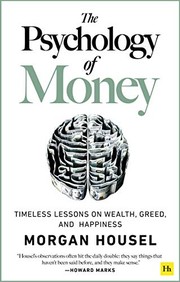
A Psychology of Money review and summary: Morgan Housel on why doing well with money is about behaviour, not intelligence.
★★★★½4.7/5
The verdict: The rare money book about behaviour, not spreadsheets, and it is superb.
🎧 Listen free on Audible
Try Kindle Unlimited
Buy the paperback
What is The Psychology of Money about?
Housel argues that financial success has less to do with how much you know and more to do with how you behave. Through nineteen short stories, he explores the psychology behind how people handle money.
The Psychology of Money summary
Housel's central idea is that money is not a hard science governed by formulas but a soft skill, where how you behave matters more than what you know. A genius who loses control of their emotions can be a financial disaster, while an ordinary person with patience and discipline can do very well.
The book is a set of nineteen largely standalone chapters, each making one point through a story. He covers the role of luck and risk, the power of compounding and why we underrate it, the difference between being rich and being wealthy, the value of enough and knowing when to stop, and why saving is more about humility and freedom than income. A recurring theme is that reasonable decisions you can stick with beat optimal ones you cannot.
Because the chapters are short and story-led, it is an easy, pleasant read that still leaves you with ideas you keep coming back to. It is less about what to do with money and more about how to think about it.
Published in 2020, it became a word-of-mouth bestseller and one of the most recommended money books of recent years. It is aimed at anyone who wants to think more clearly about money, regardless of how much they have.
Key ideas and takeaways
- Behaviour over brains. Temperament matters more than intelligence with money.
- The power of enough. Knowing when you have enough prevents ruinous risk.
- Compounding is underrated. The biggest gains come from time and patience.
- Reasonable beats optimal. A plan you can stick to wins over a perfect one you abandon.
My honest take
This is my favourite money book on the list, and the one I would hand to almost anyone. It sidesteps the usual spreadsheets and instead deals with the real reason people struggle with money, which is behaviour, emotion and story.
Housel writes beautifully and the short chapters make it a genuine pleasure to read. The ideas stick: the value of enough, the danger of moving the goalposts, the quiet power of patience. For the self-employed, whose income is lumpy and whose relationship with money is often fraught, it is grounding in a way few finance books manage. I reread bits of it regularly.
There is not much to criticise, other than that it is deliberately about principles rather than specific tactics. If you want to know which account to open or which fund to buy, this is not that book, and it is better for it.
Where it falls short
- Deliberately light on concrete, do-this financial steps.
- A couple of chapters cover similar ground, though the quality stays high.
How it compares
Where Rich Dad Poor Dad is the blunt wake-up call, The Psychology of Money is the wiser, calmer follow-up. Read Kiyosaki for the jolt and Housel for the wisdom.
Who should read it (and who should skip it)
Everyone, but especially the self-employed with irregular income and an anxious relationship with money. Hard to think of who should skip it.
How to actually use it if you are self-employed
- Define what enough looks like for you, so you know when to stop taking risks.
- Automate saving a fixed share of irregular income.
- Judge financial decisions by whether you can stick to them, not whether they are optimal.
- Behaviour beats intelligence with money.
- Know your enough and protect it.
- Let compounding and patience do the work.
Twenty years self-employed, 500+ people coached. If you want help applying this to your own situation, book a free discovery call.
Frequently asked questions
Is it a how-to money book?
No. It is about behaviour and mindset rather than specific tactics, which is what makes it stand out.
Do I need finance knowledge to read it?
None at all. It is written in plain language through stories anyone can follow.
Why is it so highly recommended?
Because it addresses the real reason people struggle with money, behaviour, rather than just the maths.
Is the audiobook good?
Yes, the short story-led chapters work very well on audio.
What should I read alongside it?
Profit First for a practical system, or The Richest Man in Babylon for the timeless basics.
Final verdict
The Psychology of Money earns 4.7/5. The rare money book about behaviour, not spreadsheets, and it is superb. If it is the stage you are at, the cheapest way in is a free Audible trial or Kindle Unlimited.
Discover more from Alan Spicer - YouTube Certified Expert
Subscribe to get the latest posts sent to your email.


