

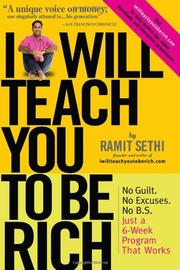
An I Will Teach You to Be Rich review and summary: Ramit Sethi's practical six-week system for automating your finances and spending guilt-free on what you love.
★★★★½4.6/5
The verdict: A no-nonsense system for automating your money so you can stop thinking about it.
🎧 Listen free on Audible
Try Kindle Unlimited
Buy the paperback
What is I Will Teach You to Be Rich about?
Sethi gives a practical, six-week programme for sorting your money: cutting fees, automating savings and bills, and setting things up so your finances largely run themselves, leaving you free to spend on what you actually enjoy.
I Will Teach You to Be Rich summary
Sethi's approach is deliberately unglamorous and systems-based. Rather than preaching frugality, he argues you should cut costs mercilessly on the things you do not care about so you can spend freely on the things you do, what he calls conscious spending.
The book is structured as a six-week action plan. It walks through optimising credit cards and bank accounts, beating fees, opening the right savings and investment accounts, and then the centrepiece: automating the whole system so money flows to bills, savings and investments the moment you are paid. He is a strong advocate of low-cost index investing and of not agonising over small decisions, arguing that getting the big things automated matters far more than fretting over a coffee.
The updated edition brings the specifics current. The tone is brash and funny, aimed at a younger audience, but underneath it is one of the most genuinely actionable personal-finance systems around, with a useful section for freelancers and irregular income.
First published in 2009 and substantially updated in 2019, it became a modern personal-finance staple aimed at a younger generation. It is aimed at people who want their money organised without becoming obsessed with budgeting.
Key ideas and takeaways
- Conscious spending. Cut hard on what you do not value so you can spend freely on what you do.
- Automate everything. Set money to flow to bills, savings and investing automatically.
- Big wins over small guilt. Sorting the big things beats agonising over a coffee.
- Invest simply. Low-cost index funds beat trying to be clever.
My honest take
This is the most practical money book on the list, and the one to reach for once The Psychology of Money has sorted your head out. Where Housel gives you the mindset, Sethi gives you the actual steps: which accounts, in what order, automated how.
The automation idea is the killer. Set your money to move itself the day you are paid, and you remove willpower from the equation entirely. For the self-employed, whose income is irregular and whose finances are easy to ignore, the section on handling variable income alone earns it a spot. The tone is loud and American, but the system underneath is genuinely useful.
The conscious-spending idea deserves special mention because it removes the guilt so many people carry. You are allowed to spend generously on what you love, provided you are ruthless on what you do not. That balance is healthier than the deprivation most money books push.
Where it falls short
- The specific accounts and products are US-focused, so UK readers adapt them.
- The loud, jokey tone will not suit everyone, especially older readers.
How it compares
The Psychology of Money sorts your mindset; I Will Teach You to Be Rich gives you the step-by-step system to act on it. Read Housel first, then Sethi to actually set things up.
Who should read it (and who should skip it)
Anyone who earns reasonably but never gets round to organising their money. Skip it if your finances are already automated and optimised.
How to actually use it if you are self-employed
- Set up automatic transfers to savings and tax the day you are paid.
- List what you love spending on and what you do not, then cut the second hard.
- Check the fees on your accounts and cards and kill the worst ones.
- Cut hard on what you do not value, spend freely on what you do.
- Automate money the day you are paid.
- Keep investing simple with low-cost funds.
Twenty years self-employed, 500+ people coached. If you want help applying this to your own situation, book a free discovery call.
Frequently asked questions
Is it UK-friendly?
The principles are, but the specific accounts and products are US-based, so you adapt those to UK equivalents.
Is it about being frugal?
No. It is about conscious spending: cutting hard on what you do not value so you can spend freely on what you do.
Is it good for freelancers?
Yes. The updated edition has a solid section on managing irregular, self-employed income.
Which edition should I read?
The updated 2019 edition, which brings the specifics current.
Do I need investing knowledge?
No. It walks you through simple, low-cost investing from scratch.
Final verdict
I Will Teach You to Be Rich earns 4.6/5. A no-nonsense system for automating your money so you can stop thinking about it. If it is the stage you are at, the cheapest way in is a free Audible trial or Kindle Unlimited.
Discover more from Alan Spicer - YouTube Certified Expert
Subscribe to get the latest posts sent to your email.


