

An honest Rich Dad Poor Dad review and summary: why Kiyosaki's flawed classic still does the one job a first money book has to do — make you rethink the salary.
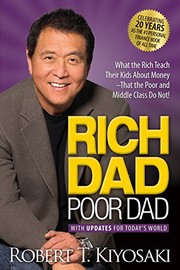
★★★★½4.4/5
The verdict: The book that makes people question the safe-job script. Flawed, but it lights the fuse.
🎧 Listen free on Audible
Try Kindle Unlimited
Buy the paperback
What is Rich Dad Poor Dad about?
Kiyosaki sets his own educated but perpetually broke father against his friend's less-schooled but wealthy one. The argument: school teaches you to work for money and never how money actually works. The fix is to buy assets that put money in your pocket and stop mistaking liabilities for assets.
Rich Dad Poor Dad summary
The book is built around a simple contrast. Kiyosaki's real father, the poor dad, was highly educated, worked hard, chased job security and stayed broke. His friend's father, the rich dad, left school early, built businesses and grew wealthy. Kiyosaki uses that contrast to make one central argument: the school system trains you to be a good employee and teaches you almost nothing about how money actually works.
From there he lays out his now-famous rules. Learn the difference between an asset and a liability, then spend your life buying assets. Understand that the wealthy do not work for money; they build or buy things that pay them whether they turn up or not. Treat your home as a liability rather than the asset most people assume it is. And take jobs for what they teach you, not only what they pay, with sales and communication singled out as the skills that change everything.
The back half moves into mindset and action: getting past fear and cynicism, paying yourself first, and using a business and the right structure to keep more of what you earn. None of it is a detailed plan. It is a way of seeing money that most people are never taught, delivered as a parable.
First published in 1997, it has sold tens of millions of copies and dragged personal finance into the mainstream self-help world. It is aimed squarely at people who were raised, as most of us were, to get good grades and find a safe job, and it is still a common first step for anyone starting to question that path.
Key ideas and takeaways
- Assets vs liabilities. An asset feeds you, a liability bleeds you. Most people buy liabilities they have been told are assets, the family home being the famous, contested example.
- The rat race. Earn, spend, earn more, spend more. A pay rise you immediately spend keeps you exactly where you started, just on a faster treadmill.
- Work to learn, not to earn. Take a job for the skills, especially sales and communication, not only the wage.
- Make money work for you. The goal is income you do not have to trade every hour for, rather than a bigger salary you never escape.
My honest take
I read this early and it did the one thing a first money book has to do: it made me annoyed enough to change something. The finance is thin and the anecdotes are almost certainly polished, but that misses the point. It reframes a payslip from security into a single income stream you do not control, and for a lot of people that is the first real crack in the wall. Twenty years self-employed, I can trace the start of it back to arguments this book started in my head.
Do not come to it for a plan. Come to it for the shift, then get your actual tactics from books that have them. As a spark, it has few equals, which is why it still sells by the truckload decades on.
What I respect most, looking back, is how efficiently it does its one job. It does not try to turn you into a finance expert. It tries to make you curious and slightly uncomfortable about how you earn and spend, and it succeeds. That discomfort is exactly what pushes people towards the second, better book.
Where it falls short
- The financial detail is thin and occasionally wrong, so do not build a real strategy on it alone.
- Kiyosaki's later ventures and paid courses have drawn plenty of fair criticism, so judge the book on its own merits and keep the wider empire at arm's length.
How it compares
Where The Psychology of Money explains why we behave badly with money, Rich Dad Poor Dad is the earlier, blunter wake-up call that there is another way to think about it at all. Read this first for the jolt, then Housel for the wisdom.
Who should read it (and who should skip it)
Anyone still assuming a salaried job is the only safe option. Skip it if you already run a business and want practical finance, because you will find it basic.
How to actually use it if you are self-employed
- List your real assets against your real liabilities this week and be honest about which your home is.
- Pick one income stream you could start outside the job, however small.
- Take one gig or role specifically to learn selling, not for the money.
- A salary is one income stream you do not control.
- Buy assets, understand liabilities, and stop confusing the two.
- Learn to sell and communicate above almost everything else.
Twenty years self-employed, 500+ people coached. If you want help applying this to your own situation, book a free discovery call.
Frequently asked questions
Is Rich Dad Poor Dad worth reading in 2026?
Yes, as a mindset primer rather than a finance manual. It still does the job of shaking loose the belief that a salary is the only safe path.
Is the rich dad character real?
Kiyosaki has always been vague about it and many doubt he existed. Read the book as a parable, not a biography, and it holds up fine.
What should I read after it?
Something with real mechanics. The Psychology of Money for behaviour, or The Millionaire Fastlane for building income that scales.
How long does it take to read?
A few hours. It is short and repetitive, so it moves quickly in print or on audio.
Do the tips work in the UK?
The tax and property specifics are American, so ignore those. The principles travel fine.
Final verdict
Rich Dad Poor Dad earns 4.4/5. The book that makes people question the safe-job script. Flawed, but it lights the fuse. If it is the stage you are at, the cheapest way in is a free Audible trial or Kindle Unlimited.
Publish reminder: set the featured image and meta description; confirm the /book-reviews/ category is assigned.
Discover more from Alan Spicer - YouTube Certified Expert
Subscribe to get the latest posts sent to your email.


