

A Lean Startup review and summary: translating Eric Ries' build-measure-learn discipline down to the scale of a one-person business.
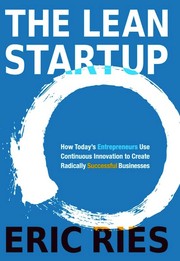
★★★★½4.5/5
The verdict: The book that stops you building something nobody wants.
🎧 Listen free on Audible
Try Kindle Unlimited
Buy the paperback
What is The Lean Startup about?
Ries applies lean manufacturing thinking to startups: build a minimum viable product, measure how real customers respond, learn from it and iterate. The aim is validated learning instead of expensive guessing.
The Lean Startup summary
Ries built the method after watching startups pour years and fortunes into products nobody wanted. His fix borrows from lean manufacturing and reframes a startup as a machine for learning under extreme uncertainty, rather than a smaller version of a big company executing a known plan.
The core loop is build, measure, learn. You build the smallest possible version of your idea, the minimum viable product, put it in front of real customers, measure how they actually behave, and use what you learn to decide the next move. He is fierce about measuring the right things, drawing a sharp line between vanity metrics that flatter you and actionable metrics that tell you the truth.
The biggest strategic idea is pivot or persevere. At regular checkpoints you look honestly at the data and decide whether to keep going or change direction. Done well, it means you fail cheaply and early on the wrong ideas, and pour your real effort only into the ones customers have already validated.
Published in 2011, it defined a way of thinking that spread far beyond Silicon Valley into how people talk about building almost anything. It is aimed at founders, but the discipline applies to anyone launching an offer into uncertainty, which is every freelancer trying something new.
Key ideas and takeaways
- Minimum viable product. The smallest thing you can put in front of real people to test whether the idea holds.
- Build-measure-learn. A loop, not a straight line. Ship, watch, adjust, repeat.
- Validated learning. Progress is measured by what you have learned about customers, not by how much you have built.
- Pivot or persevere. Decide in advance what the numbers need to say to keep going or change direction.
My honest take
Even as a one-person business, the core lesson has saved me money more than once: test cheaply before you commit. You do not need a factory or a dev team to build, measure and learn. You need to put a rough version in front of real people before you fall in love with the idea in your head.
The book is aimed at venture-backed tech and it gets jargon-heavy in places, which can feel oversized for a solo freelancer. Translate it to your scale and the discipline underneath applies to any offer you are about to launch. The instinct to build the whole thing in private and unveil it is exactly the instinct this book cures.
Scaled down to a freelancer, the lesson is almost embarrassingly simple and almost universally ignored: get people to buy the thing before you spend weeks making it. The number of course, service and product ideas I have watched get built in private and then met with silence is the whole reason this book still matters, even for a business of one.
Where it falls short
- The language and case studies are heavily tech and venture-flavoured, which can feel oversized for a solo service business.
- Some of the terminology has been overused since, to the point of buzzword fatigue.
How it compares
The $100 Startup is friendlier and more grounded for a solo starter; The Lean Startup is sharper on how to test and iterate once you are moving. Start with Guillebeau to begin, then Ries to refine.
Who should read it (and who should skip it)
Anyone about to build or launch something. Skip it if you want small-business framing rather than startup language; The $100 Startup is friendlier for that.
How to actually use it if you are self-employed
- Define the smallest version of your offer you can put in front of people this month.
- Show it to five real prospects before you build the polished version.
- Decide now what result would mean pivot and what would mean carry on.
- Build the smallest testable version first.
- Measure real behaviour, not vanity numbers.
- Decide in advance what would trigger a pivot.
Twenty years self-employed, 500+ people coached. If you want help applying this to your own situation, book a free discovery call.
Frequently asked questions
Is it only for tech startups?
It is written for them, but the build-measure-learn discipline applies to any offer, product or service you are about to launch.
What is an MVP?
A minimum viable product: the smallest version of your idea you can test with real customers to learn whether it works.
Is it still relevant?
The language is a decade old but the core discipline of testing before committing is as useful as ever.
Do I need a tech background?
No, though you will translate some examples. The underlying discipline suits any launch.
Is it better than The $100 Startup?
Different jobs. Lean Startup is about testing and iterating; The $100 Startup is about getting going cheaply. They complement each other.
Final verdict
The Lean Startup earns 4.5/5. The book that stops you building something nobody wants. If it is the stage you are at, the cheapest way in is a free Audible trial or Kindle Unlimited.
Publish reminder: set the featured image and meta description; confirm the /book-reviews/ category is assigned.
Discover more from Alan Spicer - YouTube Certified Expert
Subscribe to get the latest posts sent to your email.


