

A Zero to One review and summary: Peter Thiel on building something genuinely new instead of copying what already exists.
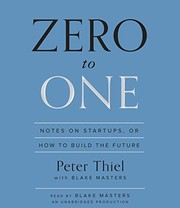
★★★★½4.5/5
The verdict: Contrarian, quotable, and a good corrective to me-too thinking.
🎧 Listen free on Audible
Try Kindle Unlimited
Buy the paperback
What is Zero to One about?
Thiel argues that real progress and real value come from going from zero to one, creating something genuinely new, rather than from one to many, copying what already works. It is a book about building the future rather than competing in the present.
Zero to One summary
Based on Thiel's Stanford lectures and written up with Blake Masters, the book makes a contrarian case about innovation and business. Going from one to many, he says, is copying things that already exist; going from zero to one is creating something genuinely new, and that is where real value is made.
His most provocative argument is about competition. Most people assume competition is healthy, but Thiel argues that fierce competition destroys profit, and that the goal should be to build a monopoly, something so distinctive it has no real competitors, at least for a while. He explores how to do that: starting by dominating a small niche, building a genuine edge, thinking for yourself rather than following the crowd, and the surprising importance of sales and distribution even for great products. A recurring theme is his contrarian question: what important truth do very few people agree with you on.
It is short, dense and quotable, more a set of provocations about building the future than a step-by-step manual. Some of it is pitched at ambitious startups, but the core challenge, build something distinctive rather than another copy, applies more widely.
Published in 2014, based on Thiel's Stanford startup lectures, it became a widely read book on innovation and building companies. It is aimed at founders and ambitious builders, though its core ideas apply more broadly.
Key ideas and takeaways
- Zero to one. Create something new rather than copying what works.
- Competition is overrated. Fierce competition destroys profit; distinctiveness protects it.
- Start with a niche. Dominate a small market before expanding.
- Think for yourself. Ask what important truth few people agree with you on.
My honest take
This is a book to read when you are about to build another me-too version of something that already exists, which is what a lot of new businesses are. Thiel's central challenge, to create something genuinely distinctive rather than compete on being marginally better or cheaper, is a valuable corrective.
For the self-employed, the scale of Thiel's startup examples can feel remote, but the principle scales down. Being the obvious, distinctive choice in a small niche beats being one of twenty near-identical freelancers competing on price. His contrarian question, what do you believe that few others do, is a genuinely useful prompt for finding your own angle. It is quotable and thought-provoking, even where you disagree with him, and it is short enough to read in a couple of sittings.
Thiel is a divisive figure and some of his broader worldview will not sit well with every reader. Taken purely as a book about building something distinctive, though, it is sharp and worth the time, disagreements and all.
Where it falls short
- Startup and venture-scale framing feels distant from a one-person business.
- Some arguments are provocative for effect, and the author is a polarising figure.
How it compares
Where most business books help you compete better, Zero to One argues you should avoid competition by being distinctive. Pair it with Start with Why to turn that distinctiveness into a clear message.
Who should read it (and who should skip it)
Anyone about to build a me-too business who needs pushing to find a distinctive angle. Skip it if you want practical, small-business steps rather than big-picture provocation.
How to actually use it if you are self-employed
- Ask what makes your offer genuinely different, not just cheaper or slightly better.
- Pick a small niche you could realistically dominate first.
- Answer Thiel's question: what do you believe that few others do.
- Build something new, not a copy.
- Distinctiveness beats competition.
- Start by owning a small niche.
Twenty years self-employed, 500+ people coached. If you want help applying this to your own situation, book a free discovery call.
Frequently asked questions
What does zero to one mean?
Creating something genuinely new (zero to one) rather than copying what already exists (one to many).
Is it only for tech startups?
The examples are, but the core idea, build something distinctive rather than a copy, applies to any business.
What is the contrarian question?
What important truth do very few people agree with you on? Thiel uses it to find original ideas and opportunities.
Is it practical?
More provocation than step-by-step, though it will sharpen how you think about what you are building.
Is it a quick read?
Yes, it is short and quotable, readable in a couple of sittings.
Final verdict
Zero to One earns 4.5/5. Contrarian, quotable, and a good corrective to me-too thinking. If it is the stage you are at, the cheapest way in is a free Audible trial or Kindle Unlimited.
Discover more from Alan Spicer - YouTube Certified Expert
Subscribe to get the latest posts sent to your email.


