Categories
BOOK REVIEWS

Zero to One Review and Summary

A Zero to One review and summary: Peter Thiel on building something genuinely new instead of copying what already exists.
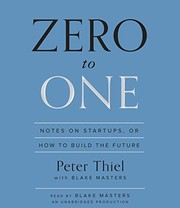
Zero to One by Peter Thiel & Blake Masters book cover

★★★★½4.5/5

The verdict: Contrarian, quotable, and a good corrective to me-too thinking.

🎧 Listen free on Audible
Try Kindle Unlimited
Buy the paperback

⚡ Quick answerZero to One by Peter Thiel & Blake Masters gets 4.5/5 from me. Contrarian, quotable, and a good corrective to me-too thinking. Anyone about to build a me-too business who needs pushing to find a distinctive angle.

What is Zero to One about?

Thiel argues that real progress and real value come from going from zero to one, creating something genuinely new, rather than from one to many, copying what already works. It is a book about building the future rather than competing in the present.

Zero to One summary

Based on Thiel's Stanford lectures and written up with Blake Masters, the book makes a contrarian case about innovation and business. Going from one to many, he says, is copying things that already exist; going from zero to one is creating something genuinely new, and that is where real value is made.

His most provocative argument is about competition. Most people assume competition is healthy, but Thiel argues that fierce competition destroys profit, and that the goal should be to build a monopoly, something so distinctive it has no real competitors, at least for a while. He explores how to do that: starting by dominating a small niche, building a genuine edge, thinking for yourself rather than following the crowd, and the surprising importance of sales and distribution even for great products. A recurring theme is his contrarian question: what important truth do very few people agree with you on.

It is short, dense and quotable, more a set of provocations about building the future than a step-by-step manual. Some of it is pitched at ambitious startups, but the core challenge, build something distinctive rather than another copy, applies more widely.

Published in 2014, based on Thiel's Stanford startup lectures, it became a widely read book on innovation and building companies. It is aimed at founders and ambitious builders, though its core ideas apply more broadly.

The one idea worth the price: Do not build a slightly better copy of what exists; build something new and distinctive enough that you are not really competing at all.

Key ideas and takeaways

  • Zero to one. Create something new rather than copying what works.
  • Competition is overrated. Fierce competition destroys profit; distinctiveness protects it.
  • Start with a niche. Dominate a small market before expanding.
  • Think for yourself. Ask what important truth few people agree with you on.

My honest take

This is a book to read when you are about to build another me-too version of something that already exists, which is what a lot of new businesses are. Thiel's central challenge, to create something genuinely distinctive rather than compete on being marginally better or cheaper, is a valuable corrective.

For the self-employed, the scale of Thiel's startup examples can feel remote, but the principle scales down. Being the obvious, distinctive choice in a small niche beats being one of twenty near-identical freelancers competing on price. His contrarian question, what do you believe that few others do, is a genuinely useful prompt for finding your own angle. It is quotable and thought-provoking, even where you disagree with him, and it is short enough to read in a couple of sittings.

Thiel is a divisive figure and some of his broader worldview will not sit well with every reader. Taken purely as a book about building something distinctive, though, it is sharp and worth the time, disagreements and all.

The honest caveat: The examples are pitched at venture-scale startups, which can feel remote from a solo business, and Thiel's wider views divide opinion. Take the principle of distinctiveness and scale it to your situation.

Where it falls short

  • Startup and venture-scale framing feels distant from a one-person business.
  • Some arguments are provocative for effect, and the author is a polarising figure.

How it compares

Where most business books help you compete better, Zero to One argues you should avoid competition by being distinctive. Pair it with Start with Why to turn that distinctiveness into a clear message.

Who should read it (and who should skip it)

Anyone about to build a me-too business who needs pushing to find a distinctive angle. Skip it if you want practical, small-business steps rather than big-picture provocation.

Best format: Kindle or paper; it is short and quotable, good to note the ideas.

How to actually use it if you are self-employed

  • Ask what makes your offer genuinely different, not just cheaper or slightly better.
  • Pick a small niche you could realistically dominate first.
  • Answer Thiel's question: what do you believe that few others do.
⚡ The 60-second recap

  • Build something new, not a copy.
  • Distinctiveness beats competition.
  • Start by owning a small niche.
A book is a shortcut. A second pair of eyes is faster.

Twenty years self-employed, 500+ people coached. If you want help applying this to your own situation, book a free discovery call.

Book a free discovery call

Frequently asked questions

What does zero to one mean?

Creating something genuinely new (zero to one) rather than copying what already exists (one to many).

Is it only for tech startups?

The examples are, but the core idea, build something distinctive rather than a copy, applies to any business.

What is the contrarian question?

What important truth do very few people agree with you on? Thiel uses it to find original ideas and opportunities.

Is it practical?

More provocation than step-by-step, though it will sharpen how you think about what you are building.

Is it a quick read?

Yes, it is short and quotable, readable in a couple of sittings.

Final verdict

Zero to One earns 4.5/5. Contrarian, quotable, and a good corrective to me-too thinking. If it is the stage you are at, the cheapest way in is a free Audible trial or Kindle Unlimited.

Disclosure: Some links in this article are affiliate links. If you buy through them I may earn a small commission, at no extra cost to you. Star ratings are my own editorial scores.
Categories
DEEP DIVE ARTICLE SOCIAL MEDIA

Who Owns Rumble? [Founder, Investors, Funding and Privacy]

Rumble, a rapidly growing video-sharing platform, has gained attention as an alternative to YouTube, championing free speech and content diversity.

Short answer? – Who Owns Rumble? – Rumble, founded in 2013 by Chris Pavlovski, is primarily owned by its founder and private investors. Peter Thiel’s Thiel Capital invested $6 million in Rumble in 2021, signaling its potential as a growing video-sharing platform.

In this article, we’ll take an in-depth look at Rumble’s ownership, including any sales and relevant stats in tables.

Rumble’s Founding and Ownership

Founder: Chris Pavlovski

Rumble was established in 2013 by tech entrepreneur Chris Pavlovski, whose expertise lies in digital media and online video technology. Before founding Rumble, Chris had worked on various online video projects and had gained valuable insights into the industry.

Recognizing the need for a platform that upheld free speech and content diversity, he set out to create Rumble as an alternative to existing video-sharing platforms with more restrictive policies.

Chris’s vision for Rumble was to build an online space where content creators could freely express their ideas and opinions without fear of censorship. In addition, he aimed to provide creators with transparent and fair monetization opportunities, setting Rumble apart from competitors like YouTube, which often faced criticism for their monetization policies and practices.

Under Chris’s leadership, Rumble has grown significantly, attracting millions of users and billions of video views. The platform’s commitment to free speech, diverse content, and fair monetization has resonated with creators who feel limited by the restrictions imposed by other platforms.

Rumble Monthly Active Users (MAU) based on the data provided by Statista:

Quarter Rumble MAU (in millions)
Q1 2020 1.6
Q2 2020 3.5
Q3 2020 5.0
Q4 2020 31.6
Q1 2021 30.0
Q2 2021 27.5
Q3 2021 36.0
Q4 2021 33.3

As Rumble continues to evolve and expand, Chris Pavlovski remains dedicated to maintaining the platform’s core values, ensuring that Rumble remains a supportive and open environment for creators and viewers alike.

Who Owns Rumble? [Founder, Investors, Funding and Privacy] 1

Current Ownership Structure

As a of September, 2022 – Peter Thiel-backed video platform Rumble plans to go public via a SPAC (special purpose acquisition company) deal with CF Acquisition Corp. VI.

The transaction values Rumble at $2.1 billion and is expected to provide the company with $420 million in cash, including a $100 million private investment in public equity (PIPE) from investors like Thiel Capital, Fidelity Management, and BlackRock.

Rumble seeks to leverage this deal to further expand its user base and compete with YouTube.

Peter Thiel Investment in Rumble

In November 2021, Peter Thiel, a well-known venture capitalist and co-founder of PayPal, made a significant investment in Rumble, highlighting the platform’s potential and growing influence in the online video market. Thiel, who is also an early investor in Facebook and a partner at the Founders Fund, invested $6 million in Rumble through his venture capital firm, Thiel Capital.

This substantial investment not only showcases Rumble’s increasing prominence as a viable alternative to YouTube but also demonstrates the confidence that prominent investors like Thiel have in Rumble’s future growth and success. The financial support provided by Thiel Capital allows Rumble to further develop its platform, enhance its features, and expand its user base.

The backing from a renowned investor like Peter Thiel also brings credibility and increased visibility to Rumble, potentially attracting more creators and viewers to the platform. With the additional resources and support from Thiel Capital, Rumble is well-positioned to compete against established players in the online video market, such as YouTube, and continue to champion free speech and fair monetization for content creators.

Who Owns Rumble? [Founder, Investors, Funding and Privacy] 2

Notable investments made by Peter Thiel

Company Industry Year
PayPal Payment Processing and Digital Wallet 1998
Facebook Social Media 2004
Palantir Technologies Data Analytics and Security 2003
Clarium Capital Global Macro Hedge Fund 2002
Founders Fund Venture Capital Firm 2005
Spotify Music Streaming 2009
Airbnb Vacation Rentals and Travel 2010
Lyft Ride-Hailing and Transportation 2011
Stripe Payment Processing 2012
Asana Project Management and Collaboration 2008
SpaceX Aerospace and Space Travel 2008
Quora Question and Answer Platform 2010
Reddit Online Community and Content Sharing 2014
SoFi Online Personal Finance Company 2015
Rumble Video Sharing Platform 2021

Please note that this list is not exhaustive, and Peter Thiel has made numerous other investments throughout his career.

Rumble’s Growth in Numbers

Rumble Statistics
Unique users (2021) Over 30 million
Video views (2021) Over 2 billion
Top channels Dan Bongino, Devin Nunes, Diamond and Silk

Rumble, founded by Chris Pavlovski in 2013, is a privately held company primarily owned by its founder and other private investors.

The platform has seen significant growth in recent years, with over 30 million unique users and more than 2 billion video views as of 2021.

High-profile investments, such as Peter Thiel’s $6 million investment, showcase Rumble’s potential as a major player in the online video market, providing content creators with an attractive alternative to YouTube.

Q: Who is the founder of Rumble?

A: Rumble was founded in 2013 by Chris Pavlovski, a tech entrepreneur with a background in digital media and online video technology.

Q: Who owns Rumble?

A: Rumble is primarily owned by its founder, Chris Pavlovski, and other private investors.

Q: Has Rumble received any significant investments?

A: Yes, in November 2021, Peter Thiel, co-founder of PayPal and a renowned venture capitalist, invested $6 million in Rumble through his venture capital firm, Thiel Capital.

Q: Why did Peter Thiel invest in Rumble?

A: Peter Thiel’s investment in Rumble showcases the platform’s growing prominence in the online video space and provides the platform with additional resources to compete with established players like YouTube.

Q: Is Rumble a publicly traded company?

A: As of 2022, Rumble went public.

Q: What is Rumble’s mission and vision?

A: Rumble’s vision is to create a platform that prioritizes free speech, content diversity, and provides content creators with transparent and fair monetization opportunities.

Q: How has Rumble grown since its founding?

A: Rumble has experienced significant growth since its founding, with over 30 million unique users and more than 2 billion video views as of 2021.

Q: Is Rumble planning to go public in the future?

A: There are currently no public statements regarding Rumble’s plans to go public. As a privately held company, any plans to go public would be announced by the company at a later date.
