

A Building a Second Brain review and summary: Tiago Forte’s system for capturing and organising ideas, and how creators can use it to publish more without starting from a blank page.
If you create content, write proposals or juggle clients, you collect ideas constantly and lose most of them. Tiago Forte’s Building a Second Brain is a system for catching those ideas and turning them into finished work. The danger, which Forte admits, is falling in love with the system instead of the output.
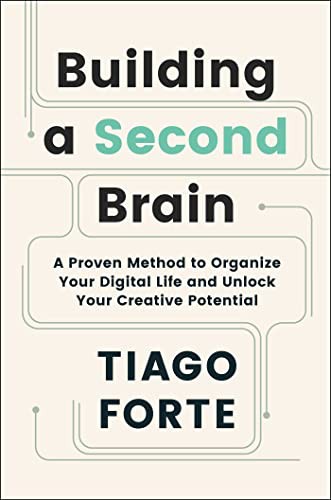
★★★★☆4.3/5
My verdict: The best book on turning your notes into finished work, as long as you use it rather than endlessly organise it.
The cheapest way to read it is free: start an Audible trial and use your credit on this one.
Listen free with an Audible trialTry Kindle Unlimited freeSee it on Amazon UK
Best format: Kindle or paperback. The book is method-heavy, with diagrams and steps you will want to refer back to while you set up your own system.
Why listen to me? I have been self-employed for 20 years (side hustler, then solopreneur, now business owner), I have coached 500+ creators and business owners, and I get through most of my business reading as audiobooks on dog walks. I review books for one reason: to tell you whether this one earns a place in your week. Read client results.
Jump to:
⚡ QUICK ANSWER: Building a Second Brain by Tiago Forte gets 4.3/5 from me. It teaches the CODE method (capture, organise, distil, express) and the PARA system (projects, areas, resources, archives) for storing ideas in a digital notes app. It suits creators, freelancers and anyone who loses good ideas or starts every project from scratch.
What Building a Second Brain is about
Tiago Forte is a productivity teacher who built a popular online course on personal knowledge management before turning it into this 2022 book. His idea is simple: your brain is for having ideas, not storing them, so you should keep a trusted external system, your second brain, that holds the notes, links and insights you collect.
The book is tool-agnostic. Forte does not care whether you use Notion, Evernote, Apple Notes or Obsidian. What matters is how you capture, organise and reuse what you save.
Building a Second Brain summary
The CODE method is the backbone. Capture means saving only what strikes you as useful rather than everything you see. Organise means sorting notes by where they will be used, not by topic. Distil means summarising notes in layers so the key points jump out later, a technique Forte calls progressive summarisation. Express means turning notes into something finished: a post, a video, a proposal or a plan.
PARA is the organising system. Projects are short-term efforts with a deadline. Areas are ongoing responsibilities, such as finances or a YouTube channel. Resources are topics you are interested in. Archives hold anything inactive. Organising by actionability means the notes you need for this week’s work are always closest to hand.
In the express section, Forte introduces intermediate packets: small, reusable pieces of work such as outlines, drafts, research notes and slides. Instead of starting from zero, you assemble new work from packets you have already made. He also borrows Richard Feynman’s idea of keeping a list of favourite problems to decide what is worth capturing.
The final chapters cover habits for maintaining the system, such as weekly and monthly reviews, and remind readers that the point is creative output, not a perfectly tidy notes app.
The one idea worth the price: Organise notes by the project they will help, not the topic they are about, and you will use them.
Key ideas and takeaways
Capture less, but better
Save only what surprises you, helps a current project or connects to your favourite problems. A smaller, sharper collection is easier to use than a digital hoard.
Organise for action
PARA puts the notes you need for current work first. For a creator, a project folder for each video series is far more useful than a folder called marketing.
Distil as you go
Bold the best lines, then highlight the best of the bold. When you come back months later, the summary is already done.
Ship intermediate packets
Outlines, hooks, scripts and research notes are all reusable. Creators who keep them can produce new work far faster than those who start fresh every time.
VIDEO
A second brain is one half of a solo content system. This video covers the other half: automating the repetitive parts so you can focus on making things.
My honest take
Building a Second Brain changed how I store ideas for videos and blog posts. Before reading it, I had notes in five apps and a camera roll full of screenshots I never looked at again.
The intermediate packets idea is the part every creator should steal. When I plan content now, I am rarely starting from a blank page; I am pulling hooks, research and outlines I saved weeks ago. That is a big part of how I plan, and it pairs with my framework for generating 100 video ideas in 30 minutes.
The PARA system is also refreshingly simple once you get past the acronyms. Four folders, organised by how soon you will need something, cover almost everything.
My warning is the one Forte gives himself. It is easy to spend weeks building the perfect system and never publish anything. The test of a second brain is how much finished work comes out of it.
Full of ideas but struggling to turn them into content?
Books compress experience; coaching speeds it up. I have spent 20 years self-employed and coached 500+ people through the same problems this book tackles. A free call is a fast way to turn what you read into a plan for your week.
- You have read the books but nothing has changed yet
- You are working long hours without much to show for it
- You want a second pair of eyes on your business or channel
Where it falls short
The book can feel like a long sales page for the method, and some readers will find the early chapters slow. People who already keep good notes may only need a summary of CODE and PARA.
There is a real risk of over-engineering. Readers who love tools can spend more time organising than creating, which defeats the point.
The honest caveat: The system only works if you express. If you are not publishing more after a month, simplify the setup until you are.
How it compares
David Allen’s Getting Things Done is the classic system for managing tasks, and Building a Second Brain is often described as its sibling for ideas.
| Building a Second Brain | Getting Things Done | |
|---|---|---|
| What it manages | Ideas, notes and knowledge | Tasks, commitments and next actions |
| Core method | CODE and PARA | Capture, clarify, organise, reflect, engage |
| Best for | Creators and knowledge workers | Anyone overwhelmed by to-dos |
| Risk | Over-organising notes | Over-processing lists |
Use Getting Things Done to manage what you need to do and Building a Second Brain to manage what you know. Many people run both side by side.
Who should read it (and who should skip it)
Read it if you create content, write for a living, manage several clients or keep losing ideas you were sure you would remember.
Skip it if you already have a notes system that produces finished work, or you know you are prone to tinkering with tools instead of using them.
How I would use it if you are self-employed
- I would pick one notes app and move my scattered notes into four PARA folders in a single afternoon.
- I would write down my favourite problems, the ten or so questions my business keeps coming back to, and capture only notes that help with them.
- I would create a project folder for my next piece of content and collect hooks, research and outlines there.
- I would book a 30-minute weekly review to tidy notes and choose one packet to turn into finished work.
People also read
If Building a Second Brain lands for you, these are the reviews readers open next.
People also ask
What is the CODE method?
CODE stands for capture, organise, distil and express. It is Forte’s four-step process for saving useful ideas, sorting them by project, summarising them in layers and turning them into finished work.
What does PARA stand for?
Projects, areas, resources and archives. It is a way of organising notes by how actionable they are, so the information you need for current work is always easiest to find.
Which app is best for a second brain?
Forte is deliberately tool-agnostic. Notion, Evernote, Obsidian and Apple Notes all work. The best choice is the one you will open every day without friction.
Frequently asked questions
Is Building a Second Brain worth reading?
Yes, if you collect lots of ideas and struggle to use them. The CODE and PARA systems are simple and practical. If you already have a notes system that works, a summary may be enough.
What is a second brain?
A trusted digital system for storing notes, ideas, links and research outside your head. The aim is to free your mind for thinking and make it easier to reuse what you have learned.
What is progressive summarisation?
A way of distilling notes in layers. You save a passage, bold the most important lines, then highlight the best of the bold, so the key points are easy to find later.
What are intermediate packets?
Small, reusable pieces of work such as outlines, drafts, research notes and slides. By saving and reusing them, you build new projects from existing parts instead of starting from scratch.
Is Building a Second Brain good for content creators?
Yes. Creators collect ideas constantly, and the system helps turn them into scripts, posts and videos faster. The intermediate packets idea is especially useful for regular publishing.
How long does it take to set up a second brain?
A basic PARA setup can be done in an afternoon. Forte recommends starting simple and improving the system over time, rather than trying to build the perfect setup before using it.
Final verdict
Building a Second Brain earns 4.3/5 from me. It is the best guide I know for turning scattered ideas into finished work. Set it up in an afternoon, keep it simple and judge it by how much you publish. The cheapest way in is a free Audible trial (your credit covers this book and it is yours to keep) or a Kindle Unlimited free trial. Prefer paper? Find it on Amazon UK.
About the author: Alan Spicer is a UK-based YouTube Certified Expert (since 2017), self-employed for 20 years, with six YouTube Silver Play Buttons and 500+ creators coached. He has grown channels including Coin Bureau Trading and Woof & Joy, and reviews the books that shaped how he runs a solo business. Fuelled by tea.
Related reading
Want the shortcut from reading to results?
I am a YouTube Certified Expert with 20 years of self-employment behind me, six Silver Play Buttons and 500+ people coached. Bring your goals to a free discovery call and leave with next steps.
Disclosure: some links in this review are affiliate links (Amazon, Audible and Kindle Unlimited). If you sign up or buy through them I may earn a commission at no extra cost to you. Free trial lengths and terms are set by Amazon and Audible, so check current terms before you sign up. Star ratings are my own editorial scores.
Discover more from Alan Spicer - YouTube Certified Expert
Subscribe to get the latest posts sent to your email.


