Categories
BOOK REVIEWS

The Millionaire Fastlane Review and Summary

A Millionaire Fastlane review and summary: MJ DeMarco's case for building wealth through business that scales, not decades of saving.

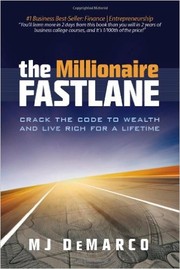
The Millionaire Fastlane by MJ DeMarco book cover

★★★★½4.6/5

The verdict: A ranty, energising attack on slow-lane get-rich-eventually advice.

🎧 Listen free on Audible
Try Kindle Unlimited
Buy the paperback

⚡ Quick answerThe Millionaire Fastlane by MJ DeMarco gets 4.6/5 from me. A ranty, energising attack on slow-lane get-rich-eventually advice. Freelancers who are just selling hours and want to think bigger about scale.

What is The Millionaire Fastlane about?

DeMarco attacks the conventional wisdom of working, saving and investing for forty years, and argues instead for the fastlane: building a business that can create wealth quickly by serving many people and scaling beyond your own hours.

The Millionaire Fastlane summary

DeMarco splits the world into three financial roadmaps. The sidewalk is living for today with no plan, spending everything and ending up broke. The slowlane is the conventional path: get a job, save hard, invest in index funds, and hope to be wealthy by retirement. The fastlane is his alternative: build a business that can grow fast and produce wealth while you are young enough to enjoy it.

His central complaint with the slowlane is that it trades your most valuable, finite resource, time, for money, and makes your wealth dependent on decades and on factors you do not control. The fastlane instead relies on what he calls the five commandments, business qualities like control, scale and detachment from your time, that let income grow independently of the hours you put in.

The tone is blunt and ranty, and he is scornful of gurus and slow-lane orthodoxy alike. Underneath the noise is a genuine argument about building income that scales and detaches from your time, which is the heart of moving from freelancer to business owner.

Published in 2011, it became a cult favourite in entrepreneurial circles for its attack on conventional wealth advice. It is aimed at people who reject the work-save-wait model and want to build wealth through business.

The one idea worth the price: Wealth built by trading time for money is capped by your hours. Build something that makes money without you in every transaction.

Key ideas and takeaways

  • Three roadmaps. Sidewalk, slowlane and fastlane, and only one builds real wealth fast.
  • Time over money. Your finite time is worth more than the money a job trades it for.
  • Scale and control. Real wealth comes from businesses you control that scale beyond your hours.
  • Detach income from time. Build income that grows without you being in every transaction.

My honest take

This is a book to read when you catch yourself accepting that wealth has to take forty years. DeMarco's rant against the save-and-wait model is bracing, and his core point, that trading your hours for money caps you, is one every freelancer needs to sit with.

Because that is the trap: going self-employed but still selling hours, just at a higher rate, is really just a better-paid job with worse security. DeMarco pushes you to think about scale and systems that detach income from your time. The delivery is over the top and he is dismissive of things that have their place, but the central challenge is a valuable one.

It pairs well with The E-Myth. Gerber shows you how to build a business that runs without you; DeMarco gives you the fire to want to in the first place, and the argument for why it matters.

The honest caveat: The tone is ranty and repetitive, and he is unfairly dismissive of sensible slow-lane investing, which suits plenty of people fine. Take the challenge, not the absolutism.

Where it falls short

  • Repetitive and combative in tone.
  • Too dismissive of conventional investing, which is a sound path for many.

How it compares

The E-Myth shows you how to build a business that runs without you; The Millionaire Fastlane gives you the motivation and the reason to. Read DeMarco for the fire and Gerber for the method.

Who should read it (and who should skip it)

Freelancers who are just selling hours and want to think bigger about scale. Skip it if the ranty tone will put you off, or you are happy with a steady slow-lane plan.

Best format: Audio suits the energetic delivery; Kindle if you want to note the commandments.

How to actually use it if you are self-employed

  • Ask whether your business would earn anything if you stopped working for a month.
  • Identify one part of your offer that could scale beyond your hours.
  • Sketch one product or system that does not need you in every sale.
⚡ The 60-second recap

  • Trading hours for money caps your wealth.
  • Build something that scales beyond your time.
  • Control and scale are what create fastlane wealth.
A book is a shortcut. A second pair of eyes is faster.

Twenty years self-employed, 500+ people coached. If you want help applying this to your own situation, book a free discovery call.

Book a free discovery call

Frequently asked questions

What is the fastlane?

Building a business that can create wealth quickly by scaling and detaching income from your own hours, rather than saving for decades.

Is it against saving and investing?

It is dismissive of relying on them alone, though conventional investing suits many people fine. Take the challenge with a pinch of salt.

Who is it best for?

Freelancers and would-be founders who want to build income that scales beyond their time.

Is it practical?

More motivational and conceptual than step-by-step, so pair it with a how-to book.

Is the tone off-putting?

It can be ranty and combative. If that grates, focus on the core argument about scale.

Final verdict

The Millionaire Fastlane earns 4.6/5. A ranty, energising attack on slow-lane get-rich-eventually advice. If it is the stage you are at, the cheapest way in is a free Audible trial or Kindle Unlimited.

Disclosure: Some links in this article are affiliate links. If you buy through them I may earn a small commission, at no extra cost to you. Star ratings are my own editorial scores.
Categories
BOOK REVIEWS

Money Review and Summary

A Money by Rob Moore review and summary: a UK entrepreneur's direct, practical guide to earning, keeping and thinking about money.

Money by Rob Moore book cover

★★★★½4.5/5

The verdict: A blunt British take on wealth, minus the American gloss.

🎧 Listen free on Audible
Try Kindle Unlimited
Buy the paperback

⚡ Quick answerMoney by Rob Moore gets 4.5/5 from me. A blunt British take on wealth, minus the American gloss. UK readers who want a relatable, British take on wealth and mindset.

What is Money about?

Rob Moore, a UK entrepreneur, sets out his beliefs and methods around money: how to earn more, keep more and give more, delivered in a blunt, British, no-nonsense style.

Money summary

Moore's book is a broad take on money from a British perspective, which sets it apart from a genre dominated by American voices. Its subtitle, know more, make more, give more, sums up the arc: understand money better, use that to earn more, and put some of it to good use.

He covers money beliefs and the emotional baggage many people carry about wealth, arguing you have to fix your mindset before the methods work. From there he moves into practical territory: raising your income, the difference between earned and other forms of income, managing and multiplying money, and his own experience going from broke and in debt to wealthy. There is a strong self-development thread throughout, tying money to purpose and self-worth.

The tone is direct and occasionally over the top, very much in Moore's own voice. It is less structured than some money books and more a collection of his hard-won principles, but the British framing and blunt delivery make it a useful, relatable read for a UK audience.

Published in 2018 by a well-known UK entrepreneur, it brought a distinctly British voice to a genre dominated by American authors. It is aimed at UK readers who want a relatable take on earning and managing money.

The one idea worth the price: Fix your beliefs about money before your methods. Most people's money problem starts in their head, not their bank account.

Key ideas and takeaways

  • Money beliefs first. Sort the emotional baggage before the tactics.
  • Know more, make more. Understanding money is the route to earning more of it.
  • Multiple income types. Move beyond only earned income.
  • Give more. Wealth is tied to purpose, not just accumulation.

My honest take

It is refreshing to have a money book written from a British point of view, without the American gloss that makes so much of the genre feel foreign. Moore has been broke and in debt himself, and that grounding shows; he is blunt about the mindset side in a way UK readers will recognise.

He can be over the top, and the book is more a collection of principles than a tidy system. But for someone here in the UK who bounces off the Cardone-style American material, this is a more relatable voice covering similar ground. Take the mindset work seriously and the practical bits as a starting point.

It works well as a British counterpart to The Psychology of Money. Housel is calmer and more polished; Moore is blunter and more personal, but both push the same truth that your relationship with money matters more than the maths.

The honest caveat: It is less structured than some money books and the tone can tip into hype and self-promotion. Take the mindset lessons and treat the delivery as background.

Where it falls short

  • Loosely structured, more a set of principles than a system.
  • The tone occasionally veers into hype and self-promotion.

How it compares

The Psychology of Money is the calmer, more polished take on money mindset; Money is the blunter, British counterpart. Read Housel for the craft and Moore for the home-grown directness.

Who should read it (and who should skip it)

UK readers who want a relatable, British take on wealth and mindset. Skip it if you prefer a tightly structured, tactical money system.

Best format: Audio or Kindle; it reads like Moore talking, which suits listening.

How to actually use it if you are self-employed

  • Write down the beliefs about money you picked up growing up, and question them.
  • Identify one way to add income beyond your main earned source.
  • Set a simple giving or saving rule you can stick to.
⚡ The 60-second recap

  • Fix your money beliefs first.
  • Understand money to earn more.
  • Build income beyond your wages, and give some back.
A book is a shortcut. A second pair of eyes is faster.

Twenty years self-employed, 500+ people coached. If you want help applying this to your own situation, book a free discovery call.

Book a free discovery call

Frequently asked questions

Is it a UK-focused money book?

Yes. Rob Moore is a British entrepreneur, which makes it more relatable for UK readers than most of the genre.

Is it practical or mindset-focused?

Both, with a strong emphasis on fixing your money beliefs before the practical methods.

Who is it best for?

UK readers who want a direct, relatable take on wealth and mindset.

How does it compare to American money books?

Similar ground, but without the American framing, which many UK readers find easier to relate to.

Is the tone off-putting?

It can be blunt and a little self-promotional, but the honesty about his own past struggles balances it.

Final verdict

Money earns 4.5/5. A blunt British take on wealth, minus the American gloss. If it is the stage you are at, the cheapest way in is a free Audible trial or Kindle Unlimited.

Disclosure: Some links in this article are affiliate links. If you buy through them I may earn a small commission, at no extra cost to you. Star ratings are my own editorial scores.
