Categories
BOOK REVIEWS

Mindset Review and Summary

A Mindset by Carol Dweck review and summary: how the fixed-versus-growth idea changes the way the self-employed handle failure, feedback and hard skills.

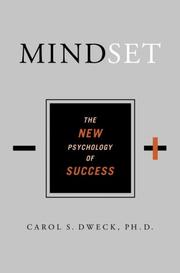
Mindset by Carol S. Dweck book cover

★★★★½4.5/5

The verdict: One idea, but an idea that quietly runs your whole career.

🎧 Listen free on Audible
Try Kindle Unlimited
Buy the paperback

⚡ Quick answerMindset by Carol S. Dweck gets 4.5/5 from me. One idea, but an idea that quietly runs your whole career. Anyone avoiding a skill because they have decided they are just not that kind of person.

What is Mindset about?

Dweck's research splits people into a fixed mindset, where ability is seen as innate and set, and a growth mindset, where ability grows with effort. The story you hold about yourself shapes how you handle challenge, feedback and failure.

Mindset summary

Dweck spent decades researching why some people crumble at setbacks while others treat them as fuel, and traces it to a single underlying belief. People with a fixed mindset believe their abilities are set, so every challenge becomes a test of whether they have it. People with a growth mindset believe abilities are built through effort, so challenges become chances to improve.

The book walks through how each mindset plays out across school, sport, business and relationships. The fixed mindset dodges challenges, gives up easily, sees effort as pointless and feels threatened by other people's success. The growth mindset does the opposite, and Dweck argues persuasively that the second group ends up further ahead precisely because they are not busy protecting a fragile self-image.

Crucially, she shows mindset is not itself fixed. You can catch fixed-mindset thinking and reframe it, most simply with the word yet. She also digs into how praise shapes both children and adults, warning that praising talent rather than effort quietly installs the very mindset you are trying to avoid.

Published in 2006 by a Stanford psychologist, it took the phrase growth mindset from academic research into everyday language, for better and occasionally for worse. It is written for anyone who wants to understand why they avoid certain challenges, and how to change that.

The one idea worth the price: Add the word yet to any sentence where you have written yourself off. I can't sell becomes I can't sell yet, and the whole game changes.

Key ideas and takeaways

  • Fixed vs growth. Do you believe you either can or cannot do something, or that you can get better at it? The answer changes everything downstream.
  • The power of yet. Not "I cannot do sales" but "I cannot do sales yet." Small change in words, large change in behaviour.
  • Effort as the path. In a growth mindset, effort is how ability is built, not proof you lack talent.
  • How praise backfires. Praising talent over effort can quietly install a fixed mindset, in you and in others.

My honest take

The self-employed live or die on how they handle being bad at things at first. Sales, marketing, saying no, pricing yourself properly: you will be clumsy at all of them early on. A fixed mindset turns every one of those early failures into a verdict about who you are. Dweck hands you a different frame, and the shift from "I am not a salesperson" to "I am not good at sales yet" is small to say and enormous in practice.

I catch myself using her language with clients constantly, because it works. It gives people permission to be a beginner without deciding they are a failure.

The self-employed are constantly made to do things they are not yet good at, in public, for money. That is fertile ground for a fixed mindset to talk you out of trying. Dweck's frame is the antidote I reach for most with nervous clients, because it makes being a beginner feel survivable rather than shameful.

The honest caveat: It is stretched thin over a full book and the research has faced replication questions in recent years. The core still stands; the padding you can comfortably skim.

Where it falls short

  • The single idea is stretched across a full book, with a lot of examples making the same point.
  • Parts of the underlying research have faced replication challenges, so hold the specifics loosely while keeping the practical frame.

How it compares

The War of Art tackles avoidance from the angle of fear and Resistance; Mindset tackles it from the angle of what you believe about your own ability. Read together, they cover most of the reasons people talk themselves out of trying.

Who should read it (and who should skip it)

Anyone avoiding a skill because they have decided they are just not that kind of person.

Best format: Audio is fine. It is conceptual rather than tactical, so you lose nothing by listening.

How to actually use it if you are self-employed

  • Catch one "I am not a X person" this week and add the word yet.
  • Ask for feedback on the exact thing you have been avoiding.
  • Treat your most recent failure as data about a method, not a verdict about you.
⚡ The 60-second recap

  • Ability grows with effort, and believing that changes behaviour.
  • Use yet to reframe every I-can't.
  • Praise effort and process, not talent.
A book is a shortcut. A second pair of eyes is faster.

Twenty years self-employed, 500+ people coached. If you want help applying this to your own situation, book a free discovery call.

Book a free discovery call

Frequently asked questions

Is the growth mindset idea actually legit?

The core idea is sound and useful, though some of the research has faced replication scrutiny. As a practical frame, it earns its keep.

How does it apply to business?

It changes how you approach every skill you are not good at yet, which as a solo operator is most of them at some point.

Do I need the whole book?

The central idea lands early. If you are short on time, the first half gives you the working model.

Is it aimed at parents or professionals?

Both. There is plenty on raising children, but the business and self-development uses are just as strong.

Can you really change your mindset?

Dweck argues yes, and the tools for doing it are the most useful part of the book.

Final verdict

Mindset earns 4.5/5. One idea, but an idea that quietly runs your whole career. If it is the stage you are at, the cheapest way in is a free Audible trial or Kindle Unlimited.

Note: Cover image via the Open Library Covers API. Rating is my own editorial score. Affiliate links are marked and support the site at no cost to you.
Publish reminder: set the featured image and meta description; confirm the /book-reviews/ category is assigned.
Categories
BUSINESS TIPS DEEP DIVE ARTICLE HOW TO GET MORE VIEWS ON YOUTUBE YOUTUBE

Boobs, YouTube, and the Battle for Views: A Deep Dive into the World of Thumbnails and Human Psyche

Welcome to the wacky, wonderful world of YouTube, where the quest for clicks, likes, and subscribes is a never-ending battle. Today, we’re taking a deep dive into a question that has plagued creators and audiences alike:

Do boobs really get you more views on YouTube?

We’ll explore the psychology, stats, and examples in this fun and friendly article, so buckle up and let’s get going!

The Psychology of Attraction

Let’s start with the basic human instincts. From an evolutionary perspective, our brains are hardwired to be attracted to certain physical traits that signal fertility and good health. For instance, the sight of a voluptuous bosom could evoke feelings of attraction as it suggests a potential mate who can nurture offspring. This is true for both men and women, albeit to varying degrees.

In the context of YouTube, this primal attraction can translate to more clicks on thumbnails featuring boobs, as it plays on our brain’s reward centre that’s geared toward seeking pleasure.

However, it’s important to note that other factors like humour, facial expressions, and intriguing visuals can also trigger the same reward centre, leading to more clicks and views.

Boobs, YouTube, and the Battle for Views: A Deep Dive into the World of Thumbnails and Human Psyche 2

The Stats: Boob-Thumbnails vs. Non-Boob-Thumbnails

Quantifying the “boob effect” on YouTube views is tricky, but some anecdotal evidence and informal studies have shown a correlation. For example, YouTuber Philip DeFranco conducted an experiment in 2012 where he alternated between boob and non-boob thumbnails for his daily vlogs. The result? Videos with boob thumbnails received significantly more views.

However, this isn’t a universal truth. A thumbnail featuring boobs may initially attract attention, but if the content is low-quality or irrelevant, viewers will leave quickly, causing watch time to suffer. In the long run, YouTube’s algorithm prioritizes watch time and engagement, so the short-term gains of a clickbait thumbnail might not translate to sustained growth for a channel.

While these statistics do not directly relate to the use of boob thumbnails on YouTube, they do demonstrate the enormous reach and influence of the platform.

Boobs, YouTube, and the Battle for Views: A Deep Dive into the World of Thumbnails and Human Psyche 1

Examples of Boob-Thumbnails in Action

There are numerous examples of creators using boobs in their thumbnails, whether they be gamers, vloggers, or pranksters. Some examples include:

  1. Prank Invasion: This channel gained notoriety for its kissing pranks, often featuring thumbnails of scantily-clad women.

Boobs, YouTube, and the Battle for Views: A Deep Dive into the World of Thumbnails and Human Psyche 3

  1. Zoie Burgher: A former Twitch streamer turned YouTuber, Zoie capitalized on her revealing outfits and thumbnails to amass a significant following.
  2. VitalyzdTv: Known for his wild pranks and social experiments, Vitaly often includes provocative images of women in his thumbnails.

While these examples highlight the potential for boobs to draw attention, it’s essential to note that these creators also rely on engaging content to maintain their audience.

In other words, the boobs may reel viewers in, but it’s the content that keeps them coming back for more.

Average YouTube Click-Through Rates

Ad Format Click-Through Rate
TrueView Ads 0.3%
TrueView Ads with CTA 0.76%
Bumper Ads 0.48%
Display Ads 0.47%
Overlay Ads 0.21%

(Source: Google)

Factors Affecting YouTube Click-Through Rates

Factor Impact on Click-Through Rate
Video Title The title is the most important factor in determining whether someone will click on a video, and can affect click-through rates by up to 40%.
Thumbnail The thumbnail is the second most important factor and can affect click-through rates by up to 30%.
Video Length Shorter videos tend to have higher click-through rates.
Video Quality High-quality videos with engaging content tend to have higher click-through rates.
Call to Action (CTA) Including a CTA in the video can increase click-through rates by up to 15%.

(Source: YouTube Creator Academy)

YouTube Click-Through Rates by Industry

Industry Average Click-Through Rate
Apparel & Accessories 2.26%
Beauty & Personal Care 1.14%
Consumer Electronics 0.85%
Food & Beverage 1.75%
Health & Fitness 1.23%
Home & Garden 1.26%
Travel & Tourism 1.04%

(Source: Google)

These statistics demonstrate the importance of factors such as video title, thumbnail, and quality content in determining click-through rates on YouTube. Additionally, the data highlights the variation in click-through rates across different industries on the platform.

So, do boobs get you more views on YouTube?

The answer is both yes and no. While using boobs in thumbnails can certainly grab attention, it’s only a piece of the puzzle. Engaging, high-quality content is crucial for maintaining an audience and appeasing the YouTube algorithm.

So, if you’re a content creator looking to boost your views, remember that there’s more to it than just flaunting some cleavage!