

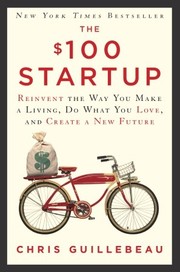
A $100 Startup review and summary: Chris Guillebeau's case studies are the antidote to thinking you need funding and permission to begin.
★★★★½4.5/5
The verdict: Proof you do not need investors, staff or an office to start.
🎧 Listen free on Audible
Try Kindle Unlimited
Buy the paperback
What is The $100 Startup about?
Guillebeau studies more than fifty people who built profitable microbusinesses on tiny budgets, then pulls out the patterns: solve a real problem, match a skill to a need, and start before you feel ready.
The $100 Startup summary
Guillebeau's book is built on research rather than theory. He studied more than fifty ordinary people who had each built a business generating a solid income from a starting investment of around a hundred dollars or less, then looked for what they had in common.
The patterns are refreshingly plain. Successful microbusinesses tend to sit at the convergence of something the founder is good at and something people will actually pay for. They solve a real, specific problem. They start small and cheap, often as a side project, and they reach a paying customer as fast as possible rather than perfecting in private. He champions the one-page business plan and the idea of selling before you build, testing demand with a real offer before investing serious time.
Running through all of it is a particular definition of success. For Guillebeau the goal is freedom and enough income to live on your own terms, not growth for its own sake. The book is as much a permission slip as a manual, aimed at people who assume they need money, contacts or credentials they do not actually have.
Published in 2012 by a writer known for unconventional living, it drew on a large set of real microbusiness case studies rather than theory. It is aimed at people who want to work for themselves on a small budget, and who assume, wrongly, that they need more than they have to start.
Key ideas and takeaways
- Convergence. The sweet spot where something you are good at meets something people will actually pay for.
- The one-page business plan. If it does not fit on a page, you are overcomplicating the start.
- Sell before you build. Get a yes and money on the table before you pour time into building the thing.
- Freedom as the goal. Success is defined as freedom and enough income, not scale for its own sake.
My honest take
This is the antidote to the lie that you need funding and someone's permission to begin. The case studies are the whole point: dozens of ordinary people who started with almost nothing and made it pay. For anyone stuck at the "but how would I even begin" stage, it is a shot of grounded optimism rather than hype.
I like that it defines success as freedom and a good income, not as building an empire. Plenty of people reading this list do not want a hundred staff; they want to work for themselves and be paid well for it. This book is squarely for them, and it makes the first step feel possible instead of enormous.
What I like is that it argues, with evidence, against the two excuses that stop most people: I need money, and I need permission. Fifty-odd case studies of people who had neither and started anyway is a hard thing to argue with. For the reader who wants to work for themselves without building an empire, it is close to a perfect first book.
Where it falls short
- Survivorship bias runs through it; you are reading only about the ones who made it.
- A few examples feel a little too neat, so treat them as inspiration rather than a formula.
How it compares
The Lean Startup gives you the method for testing an idea; The $100 Startup gives you the confidence and the plain first steps to begin at all. Read this one first if the blank page is the thing stopping you.
Who should read it (and who should skip it)
First-time, bootstrapped starters. Skip it if you are already trading and want growth tactics rather than starting ones.
How to actually use it if you are self-employed
- Write your offer on a single page, no longer.
- Try to pre-sell it before you build anything.
- Match one skill you already have to a problem people already pay to solve.
- Start where your skills meet real demand.
- Keep the plan to one page and sell before you build.
- Define success as freedom, not size.
Twenty years self-employed, 500+ people coached. If you want help applying this to your own situation, book a free discovery call.
Frequently asked questions
Do I really only need $100?
The title is a hook. The real point is that many businesses start on very little, so lack of capital is rarely the true blocker.
Is it good for service businesses?
Yes. Many of the case studies are service and skill based, which suits most freelancers well.
What should I read next?
The Lean Startup to test your idea, or Company of One if you want to stay deliberately small.
Is the $100 figure realistic?
It is a hook to make a point. The real message is that lack of capital is rarely the true barrier to starting.
Is it dated now?
The tools and mindset hold up well, even if a few specific examples are of their time.
Final verdict
The $100 Startup earns 4.5/5. Proof you do not need investors, staff or an office to start. If it is the stage you are at, the cheapest way in is a free Audible trial or Kindle Unlimited.
Publish reminder: set the featured image and meta description; confirm the /book-reviews/ category is assigned.
