

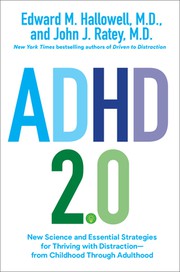
An ADHD 2.0 review and summary: two experts, both with ADHD themselves, on understanding and working with the ADHD brain.
★★★★½4.5/5
The verdict: A clear, compassionate guide to a brain that works differently.
🎧 Listen free on Audible
Try Kindle Unlimited
Buy the paperback
What is ADHD 2.0 about?
Hallowell and Ratey, both psychiatrists who have ADHD themselves, give an up-to-date, compassionate account of how the ADHD brain works and practical strategies for managing it, drawing on recent research and their own experience.
ADHD 2.0 summary
The book reframes ADHD not as a simple deficit but as a different way the brain is wired, with real challenges and genuine strengths. The authors, who both have ADHD, write with warmth and first-hand understanding rather than clinical distance.
They explain the current science, including the roles of two brain networks and how they can misfire in ADHD, and introduce ideas like the negativity and harsh self-criticism that often come with it. The bulk of the book is practical: strategies around exercise, sleep, nutrition, structure and environment, the value of the right kind of stimulation, medication and when it helps, and building a life and work setup that plays to ADHD strengths rather than fighting them.
It is short, readable and non-judgemental, aimed at people with ADHD and those close to them. For the many self-employed people who work differently, it offers both explanation and a toolkit.
Published in 2021, it is an updated take on ADHD from two long-standing experts in the field who have the condition themselves. It is aimed at adults with ADHD and the people around them who want understanding and practical help.
Key ideas and takeaways
- Difference, not deficit. ADHD brings genuine strengths alongside real challenges.
- Structure helps. External systems and environment do the work willpower cannot.
- Body affects brain. Exercise, sleep and nutrition matter more than most realise.
- Play to strengths. Design work that suits your wiring rather than fighting it.
My honest take
This is not a business book, but it earns its place because so many self-employed people work differently, and this explains why with compassion rather than judgement. Written by two psychiatrists who have ADHD themselves, it avoids both the doom and the hype and simply helps you understand your own wiring.
The practical strategies are the valuable part, and many suit the self-employed well: building external structure, using the right environment, leaning into the kind of stimulating work that ADHD brains do brilliantly. If you have ever wondered why standard productivity advice does not work for you, this is a gentle, useful place to start. Worth saying plainly: it is a guide, not a diagnosis, and a qualified professional is the person for that.
What sets it apart is the tone. It is hopeful without being naive, honest about the difficulties without being bleak, and it treats the reader as capable rather than broken. For anyone recently making sense of how their brain works, that matters.
Where it falls short
- Accessible rather than in-depth, so it may feel light to those wanting the full science.
- As a general guide, it is no replacement for a proper professional assessment.
How it compares
Where most productivity books assume a neurotypical brain, ADHD 2.0 is written for one that works differently. Pair it with Atomic Habits, using its systems in the ADHD-friendly ways this book suggests.
Who should read it (and who should skip it)
People with ADHD, or who suspect it, and those close to them, especially the many self-employed who work differently. Skip it if you want a deep clinical text rather than a practical guide.
How to actually use it if you are self-employed
- Build one external structure, a list, alarm or routine, to carry what willpower does not.
- Add regular exercise, which the book links strongly to focus.
- Design your work around stimulating tasks you naturally engage with.
- ADHD is different wiring, with strengths as well as struggles.
- Use structure and environment to do what willpower cannot.
- Look after the body to help the brain.
Twenty years self-employed, 500+ people coached. If you want help applying this to your own situation, book a free discovery call.
Frequently asked questions
Is it a business or productivity book?
Neither exactly, but its strategies are highly relevant to the many self-employed people who have ADHD or work differently.
Who wrote it?
Two psychiatrists, Hallowell and Ratey, who both have ADHD themselves, which gives it first-hand understanding.
Can it diagnose me?
No. It helps you understand and manage ADHD, but a proper diagnosis needs a qualified professional.
Is it up to date?
Yes, it reflects more recent research than the authors' earlier work.
Is it useful for partners or family?
Yes. It is written to help both people with ADHD and those close to them.
Final verdict
ADHD 2.0 earns 4.5/5. A clear, compassionate guide to a brain that works differently. If it is the stage you are at, the cheapest way in is a free Audible trial or Kindle Unlimited.
