

A 4-Hour Work Week review and summary: what still holds up in Tim Ferriss' famous book, and what to quietly ignore.
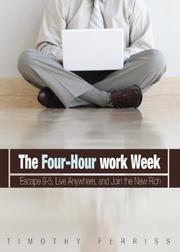
★★★★½4.4/5
The verdict: Half of it dated badly, half of it reset how a generation thinks about work.
🎧 Listen free on Audible
Try Kindle Unlimited
Buy the paperback
What is The 4-Hour Work Week about?
Ferriss argues you do not need to wait for retirement to live well. Through automation, outsourcing and focusing only on what matters, he says you can design a life of freedom now rather than deferring it for decades.
The 4-Hour Work Week summary
The book is organised around a framework Ferriss calls DEAL: Definition, Elimination, Automation and Liberation. Definition is about redefining what you want, replacing the retire-rich dream with mini-retirements and lifestyle design. Elimination applies the 80-20 rule and time-management thinking to cut the busywork that fills most days.
Automation is the famous part: building income sources, which he calls muses, that run with minimal input, and outsourcing tasks to virtual assistants. Liberation is about breaking free of the office, negotiating remote work or running a business from anywhere.
The examples are of their late-2000s moment and some, such as the specific outsourcing tactics, have dated or been done to death since. But the underlying reframe, that you can design your work around your life rather than the other way round, was genuinely radical at the time and still shifts how people think.
Published in 2007, it became a defining book of the early lifestyle-business movement and made outsourcing and passive income mainstream ideas. It is aimed at people who feel trapped in a conventional career and suspect there is another way.
Key ideas and takeaways
- Lifestyle design. Build your work around the life you want, not the reverse.
- The 80-20 cut. Most results come from a few activities. Ruthlessly cut the rest.
- Build a muse. Create income that runs with little ongoing input.
- Mini-retirements. Take freedom in chunks now rather than deferring it all to old age.
My honest take
It is easy to be cynical about this book now, partly because so many of its tactics were copied into the ground. But it is worth remembering how genuinely fresh the core idea was: that you could arrange work around living instead of postponing life until retirement.
Read it for that reframe rather than the specific tactics. The outsourcing and automation chapters have aged, and the lifestyle it sells is very of its era. But the question it forces, why are you organising your whole life around a job you plan to escape decades from now, is one every self-employed person should sit with.
I take it as a mindset book rather than a manual. The four-hour promise is a hook, not a literal target, and treating it that way lets you keep the valuable part without rolling your eyes at the rest.
Where it falls short
- Several tactics are outdated or now saturated, so do not follow them literally.
- The tone is boastful in places, which puts some readers off the genuinely useful ideas.
How it compares
Company of One is the calmer, more current take on building work around freedom; The 4-Hour Work Week is the louder original that started the conversation. Read Ferriss for the spark and Jarvis for the sustainable version.
Who should read it (and who should skip it)
Anyone stuck in a conventional work model who needs their assumptions shaken. Skip it if you want current, practical tactics rather than a mindset jolt.
How to actually use it if you are self-employed
- List the few activities that drive most of your results and protect them.
- Identify one recurring task you could automate or outsource.
- Plan one short break now instead of deferring all rest to the future.
- Design your life, then build work to fit it.
- Cut the busywork with the 80-20 rule.
- Take freedom now, not only at retirement.
Twenty years self-employed, 500+ people coached. If you want help applying this to your own situation, book a free discovery call.
Frequently asked questions
Is it still worth reading?
For the mindset shift, yes. For the specific tactics, read them with caution, as many have dated.
Can you really work four hours a week?
It is a hook, not a literal promise. Treat it as lifestyle design, not a guarantee.
Is it outdated?
Parts are, especially the tactics. The core idea about designing life around work still lands.
Who is it best for?
People stuck in a traditional job or mindset who need their assumptions challenged.
Should I follow the outsourcing advice?
Take the principle, not the specifics. That part of the book has aged the most.
Final verdict
The 4-Hour Work Week earns 4.4/5. Half of it dated badly, half of it reset how a generation thinks about work. If it is the stage you are at, the cheapest way in is a free Audible trial or Kindle Unlimited.
Publish reminder: set the featured image and meta description; confirm the /book-reviews/ category is assigned.
Discover more from Alan Spicer - YouTube Certified Expert
Subscribe to get the latest posts sent to your email.


