

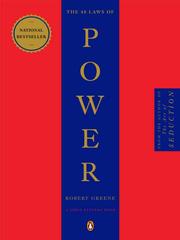
A 48 Laws of Power review and summary: Robert Greene's controversial catalogue of how power really works, for better and worse.
★★★★½4.5/5
The verdict: Cynical, amoral and uncomfortable, and worth reading with your eyes open.
🎧 Listen free on Audible
Try Kindle Unlimited
Buy the paperback
What is The 48 Laws of Power about?
Greene sets out forty-eight laws of power, drawn from history and strategy, describing how power is gained, kept and lost. It is amoral by design: a description of how power games are played, not an endorsement of playing them.
The 48 Laws of Power summary
Greene distils centuries of history, from courtiers and generals to con artists and monarchs, into forty-eight laws, each illustrated with historical stories of people who followed or broke it. The laws are blunt and often ruthless: never outshine the master, conceal your intentions, court attention at all costs, get others to do the work but take the credit, crush your enemy totally.
The book does not pretend to be nice. It is a clear-eyed, at times chilling account of how power actually operates beneath the polite surface, and how ambitious people through history have manoeuvred, manipulated and protected themselves. Each law comes with a reversal, a note on when it does not apply, which adds some nuance to the ruthlessness.
It is long, densely packed with stories, and deliberately provocative. Readers tend to fall into two camps: those who take it as a manual to follow, and those who take it as a map of the games being played around them so they can recognise and defend against them. The second reading is the more useful and the more defensible.
Published in 1998, it became a cult bestseller and a fixture on many an ambitious reading list, as controversial as it is popular. It is aimed at anyone curious about how power really works, though it is best read critically.
Key ideas and takeaways
- Power is a game. There are recognisable patterns to how power is won and lost.
- Manage perception. How you are seen often matters more than what you do.
- Guard yourself. Much of the value is spotting these tactics used on you.
- Every law has a reversal. Context decides when a law applies and when it backfires.
My honest take
Let me be honest about this one: taken as a to-do list, it is a recipe for becoming someone unpleasant, and I would not recommend living by it. Taken as a map, though, it is genuinely valuable, because it names the manipulations and power plays that happen in business whether you engage in them or not.
For the self-employed dealing with clients, competitors and the occasional bad actor, recognising these games is a form of self-defence. You do not have to stab anyone in the back to benefit from spotting when someone is trying it on you. Read it with your eyes open, keep your ethics intact, and treat it as an education in human behaviour rather than a rulebook. On those terms, it earns its place.
It is worth saying plainly that plenty of the laws are ugly, and the book has a whiff of the sociopathic if you read it uncritically. The reversals and the historical framing help, but this is one to read as an observer, not a disciple.
Where it falls short
- Amoral by design, and genuinely unpleasant if taken as life advice.
- Long and repetitive, with historical stories that sometimes stretch to fit the law.
How it compares
Where Influence explains everyday persuasion with research and ethics front and centre, The 48 Laws of Power maps the harder, darker end of human strategy. Read Cialdini to persuade well and Greene to recognise when you are being played.
Who should read it (and who should skip it)
Anyone who wants to understand the darker mechanics of power and protect themselves from them. Skip it if cynical, amoral content puts you off, or you would be tempted to follow it literally.
How to actually use it if you are self-employed
- Read it to recognise power plays, not to run them.
- When a deal feels off, check it against these laws to see what is being attempted.
- Keep your own conduct straight; use the book for awareness, not tactics.
- Power follows recognisable patterns.
- The best use is spotting the games played on you.
- Keep your ethics; read it as a map, not a manual.
Twenty years self-employed, 500+ people coached. If you want help applying this to your own situation, book a free discovery call.
Frequently asked questions
Is it a book about being manipulative?
It describes manipulation rather than endorsing it. Most readers get the most value using it defensively, to spot the tactics.
Is it worth reading?
Yes, if read critically as a map of power rather than a rulebook to live by.
Is it dark?
Very. It is amoral by design, so approach it with your own ethics firmly in place.
Should I actually follow the laws?
Following them literally would make you someone unpleasant. The smarter use is recognising them in others.
Is it long?
Yes, it is dense and story-heavy. It works well dipped into rather than read straight through.
Final verdict
The 48 Laws of Power earns 4.5/5. Cynical, amoral and uncomfortable, and worth reading with your eyes open. If it is the stage you are at, the cheapest way in is a free Audible trial or Kindle Unlimited.
