

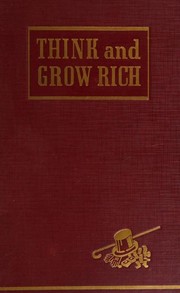
A Think and Grow Rich review and summary: reading past the 1930s language to find why Napoleon Hill's principles still underpin every hustle book since.
★★★★½4.4/5
The verdict: The granddaddy of the genre. Dated, but the bones are still good.
🎧 Listen free on Audible
Try Kindle Unlimited
Buy the paperback
What is Think and Grow Rich about?
Hill's 1937 study of successful people distils success into principles: a definite purpose, burning desire, faith, persistence and the mastermind. It is the source code for most modern success writing.
Think and Grow Rich summary
Hill claims to have spent twenty years studying hundreds of successful people, including the industrialists of his era, to work out what they had in common. The result is thirteen principles, though a handful do the real work.
He opens with desire, arguing that vague wishes achieve nothing and that you need a burning, specific, written goal with a deadline and a plan. He adds faith and autosuggestion, the practice of feeding your own mind the belief that you will succeed. He stresses specialised knowledge over general education, and organised planning over hoping. Then comes persistence, the refusal to quit that he treats as the most common trait among people who eventually win.
The idea with the longest shelf life is the mastermind, the deliberate use of a group whose combined knowledge and energy lifts every member. Much of the modern coaching, networking and accountability world is a descendant of that single chapter. The language is very much of 1937 and a few sections have not aged well, but the skeleton underneath is the source of a whole genre.
First published in 1937 during the Great Depression, it is one of the best-selling personal development books ever written and the taproot of the whole genre. It is aimed at anyone willing to look past dated language to find the origins of ideas they have met a hundred times since.
Key ideas and takeaways
- Definiteness of purpose. Decide precisely what you want. Vague goals get vague results.
- The mastermind. Surround yourself with a group whose combined thinking lifts everyone. Still one of the most useful ideas in business.
- Persistence. The willingness to keep going past the point most people quit.
- Specialised knowledge. General knowledge is nearly useless for making money. Deep, applied knowledge in one area is where the value sits.
My honest take
You have to read past the seance-era language and one or two chapters that have not aged well at all. But the core, decide exactly what you want and then refuse to quit, is the spine of nearly every success book written since. The mastermind idea alone changed how I work; I have been in one form of it or another for years, and the compounding effect of the right room of people is real.
Read it as a historical source rather than a modern manual and it earns its place easily. It is where the whole genre started, and going back to the original is often more useful than reading the hundredth copy of it.
Going back to the original is more useful than people expect. So many modern books are just one of these thirteen ideas restated, so reading the source gives you the whole map at once. The mastermind chapter alone reshaped how I structure my working life, and it earns the entry price by itself.
Where it falls short
- The 1937 language and worldview take patience, and a couple of chapters drift into pseudoscience.
- It is long on principle and short on modern, practical steps, so pair it with something tactical.
How it compares
The 10X Rule is the modern, louder descendant of this book's message about desire and massive action. Read Hill for the original blueprint and Cardone for the high-energy remix.
Who should read it (and who should skip it)
Anyone who wants to understand where modern success thinking came from. Skip it if archaic language grates on you.
How to actually use it if you are self-employed
- Write your single most definite goal with a real deadline attached.
- Form or join a mastermind, even an informal one with two other people.
- Name the one specialised skill worth going deep on this quarter.
- Set a definite goal with a deadline.
- Persist past the point where most people quit.
- Build a mastermind around you.
Twenty years self-employed, 500+ people coached. If you want help applying this to your own situation, book a free discovery call.
Frequently asked questions
Is it still worth reading?
As the origin of the genre, yes. Read it as a source rather than a step-by-step, and the core principles hold.
Is it outdated?
The language and some examples are, but the central ideas about purpose and persistence are not.
What is the mastermind idea?
Working with a group whose combined focus and contacts lift every member. It remains one of the book's most practical takeaways.
Is there a free version?
As an older classic it is often free or cheap, and frequently on Kindle Unlimited.
Which chapter matters most?
Desire and the mastermind. Get precise about what you want, then surround yourself with the right people.
Final verdict
Think and Grow Rich earns 4.4/5. The granddaddy of the genre. Dated, but the bones are still good. If it is the stage you are at, the cheapest way in is a free Audible trial or Kindle Unlimited.
Publish reminder: set the featured image and meta description; confirm the /book-reviews/ category is assigned.
