

An E-Myth Revisited review and summary: why most self-employed people accidentally build themselves a job, and how Gerber says to fix it.
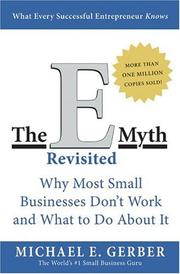
★★★★½4.6/5
The verdict: The book that explains why being good at the work is not enough to run the business.
🎧 Listen free on Audible
Try Kindle Unlimited
Buy the paperback
What is The E-Myth Revisited about?
Gerber's central idea is that most small businesses are started by technicians, people good at the actual work, who wrongly assume that being good at the work means they can run a business doing that work. The result is a job that owns them.
The E-Myth Revisited summary
Gerber opens with the entrepreneurial myth, the E-Myth of the title: the belief that businesses are started by entrepreneurs taking a calculated risk. In reality, he says, most are started by technicians, the baker who opens a bakery, the developer who goes freelance, on the false assumption that doing the work and owning the business are the same skill.
He splits the owner into three roles: the technician who does the work, the manager who creates order, and the entrepreneur who holds the vision. Most owners are almost all technician, which is why they end up buried. His fix is to work on your business, not just in it, building it as though you were creating a franchise prototype that could run without you.
The practical heart of the book is systems. Document how everything is done, so the business depends on repeatable processes rather than on your constant presence. Gerber tells it through a fictional pie-shop owner named Sarah, whose story runs through the book as she moves from overwhelmed technician to genuine owner.
First published in 1986 and revised in 1995, it has sold millions and become a standard recommendation for small-business owners. It is aimed at the technician-turned-owner who is working flat out and getting nowhere.
Key ideas and takeaways
- The E-Myth. Being brilliant at the work does not mean you can run a business built on that work.
- Work on it, not in it. Spend time building the business as a system, not only doing the daily tasks.
- Technician, manager, entrepreneur. A healthy business needs all three, but most owners are stuck as pure technician.
- The franchise prototype. Build as if you will franchise it, so everything is documented and repeatable.
My honest take
This is the book that names the trap almost every freelancer falls into. You are great at the thing, so you go solo doing the thing, and within a year you have simply hired yourself the worst boss you have ever had, with no holidays and no off switch.
Gerber's answer, systemise everything so the business does not live entirely in your head, is the difference between owning a business and being owned by one. Twenty years in, the people I have seen escape the grind are almost always the ones who took this lesson seriously early.
The fictional Sarah and the franchise language can feel dated, and you have to look past the repetition. But the core idea is one of the most important on this whole list for anyone who wants to stop trading every hour for money.
Where it falls short
- The writing circles the same points and pads them with the Sarah narrative.
- The franchise-prototype model suits some businesses far better than others, so you may have to translate.
How it compares
Where The Lean Startup is about testing what to build, The E-Myth is about building the business so it does not collapse without you. Pair it with Traction if you want a modern operating system to put the idea into practice.
Who should read it (and who should skip it)
Any freelancer or solo operator who feels trapped doing everything themselves. Skip it if you already run a systemised business with a team.
How to actually use it if you are self-employed
- Pick one task you do repeatedly and write a simple step-by-step process for it this week.
- List which of your hours are technician work and which actually build the business.
- Choose one part of the business to make less dependent on you being present.
- Doing the work and owning the business are different skills.
- Work on the business, not only in it.
- Systemise everything so it does not all live in your head.
Twenty years self-employed, 500+ people coached. If you want help applying this to your own situation, book a free discovery call.
Frequently asked questions
What does E-Myth mean?
The entrepreneurial myth: the false belief that being good at a skill means you can run a business based on that skill.
Is it only for shops and franchises?
No. The franchise language is a device. The systemising principle applies to any solo or small business.
Is it still relevant?
Very. The trap it describes is exactly what most modern freelancers fall into.
Do I need the revised edition?
The revised edition is the standard one and the one most people mean when they recommend it.
Is it a quick read?
Fairly quick, though it repeats itself, so you can move through it at pace.
Final verdict
The E-Myth Revisited earns 4.6/5. The book that explains why being good at the work is not enough to run the business. If it is the stage you are at, the cheapest way in is a free Audible trial or Kindle Unlimited.
Publish reminder: set the featured image and meta description; confirm the /book-reviews/ category is assigned.
