Categories
BOOK REVIEWS

Can’t Hurt Me Review and Summary

A Can't Hurt Me review and summary: taking David Goggins' usable mental-toughness tools without buying the whole extreme lifestyle.
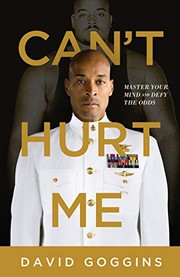
Can't Hurt Me by David Goggins book cover

★★★★½4.7/5

The verdict: Not a business book, but the toughness one that actually sticks.

🎧 Listen free on Audible
Try Kindle Unlimited
Buy the paperback

⚡ Quick answerCan't Hurt Me by David Goggins gets 4.7/5 from me. Not a business book, but the toughness one that actually sticks. Anyone making excuses who needs a jolt.

What is Can't Hurt Me about?

Goggins' memoir tracks his path from an abused, overweight kid to a Navy SEAL and ultra-runner, built around mental toughness and the idea of callousing the mind through deliberate hardship.

Can't Hurt Me summary

The book alternates between memoir and method. The story follows Goggins from a childhood scarred by abuse, poverty and racism, through being overweight and directionless, to remaking himself into a Navy SEAL and one of the world's toughest endurance athletes. It is genuinely gripping, and the hard-won nature of the transformation is what gives the tools their weight.

Between the chapters he sets out the mental techniques he used. The accountability mirror, where you face the blunt truth about yourself and your goals. The 40% rule, his belief that when your mind says you are finished, you have used only about forty percent of your capacity. The cookie jar, a mental store of past hard things you have overcome that you reach into when you want to quit. And callousing the mind, deliberately seeking discomfort so that hardship loses its grip on you.

Each chapter ends with a challenge, which turns the book into something closer to a programme than a straight read. The audiobook adds candid conversations between Goggins and his co-author that expand on every idea.

Published in 2018, it became a word-of-mouth phenomenon on the back of Goggins' podcast appearances and remains one of the most talked-about mental-toughness books of recent years. It is aimed at anyone who suspects they are capable of more than they are currently doing.

The one idea worth the price: The 40% rule: when everything in you says stop, you are only about forty percent done. There is far more left than your mind admits.

Key ideas and takeaways

  • The 40% rule. When your mind says you are done, you are roughly forty percent in. There is far more in the tank than the brain admits.
  • The accountability mirror. Tell yourself the blunt truth about where you are and what it will take.
  • The cookie jar. Keep a mental store of past hard things you got through, and draw on it when you want to quit.
  • Callousing the mind. Do hard things on purpose so the hard things that arrive uninvited hurt less.

My honest take

I am wary of the hard-man genre, but this one earns its place because the tools are usable, not just the story. The 40% rule is something I genuinely use on bad days, when the temptation to stop shows up long before I have actually run out of capacity.

Borrow the tools and leave the extremity. You do not have to run a hundred miles to use his methods. The self-employed grind is not Hell Week, but the reality Goggins keeps returning to, that no one is coming to save you, rhymes uncomfortably well with running your own thing. Take that, and the mirror, and the cookie jar, and you have a genuinely useful toolkit.

I came to this sceptical of the whole no-excuses genre and left using several of the tools for real. The trick is to separate the method from the man. You do not need to run ultramarathons to use the 40% rule on a hard afternoon, or a cookie jar of past wins on the days your confidence deserts you. Taken that way, it is one of the most practical toughness books there is.

The honest caveat: Goggins is extreme and the relentless tone will not suit everyone. Take it as inspiration and tools, not as a lifestyle you must copy.

Where it falls short

  • The intensity is relentless and the tone can tip into machismo that will not suit everyone.
  • It is light on rest and recovery, so take the drive without the burnout.

How it compares

Where Mindset explains the psychology of pushing past your limits, Can't Hurt Me is the raw, first-person account of someone doing it to an extreme. Read Dweck for the theory and Goggins for the fuel.

Who should read it (and who should skip it)

Anyone making excuses who needs a jolt. Skip it if a gritty, intense tone puts you off.

Best format: Audio, without question. The audiobook has Goggins talking between chapters and it is the best version of the book by a distance.

How to actually use it if you are self-employed

  • Next time you want to stop, deliberately do forty percent more.
  • Keep a running list of past wins to pull from when resolve dips.
  • Do one uncomfortable thing on purpose each day to build the callous.
⚡ The 60-second recap

  • You have far more in the tank than your mind claims.
  • Bank your past wins and draw on them when you flag.
  • Seek discomfort on purpose to build resilience.
A book is a shortcut. A second pair of eyes is faster.

Twenty years self-employed, 500+ people coached. If you want help applying this to your own situation, book a free discovery call.

Book a free discovery call

Frequently asked questions

Is it a business book?

No, it is a memoir about mental toughness. But the tools transfer directly to the discipline self-employment demands.

Which format is best?

The audiobook, because Goggins adds commentary between chapters that the print version does not have.

What is the 40% rule?

The idea that when your mind says you are finished, you are only about forty percent spent and can push further.

Is it useful if I don't care about fitness?

Yes. The physical feats are the backdrop; the transferable part is the mental toolkit.

Why is the audiobook recommended so strongly?

Because Goggins adds unscripted commentary between chapters that you do not get in print, and it is the best part.

Final verdict

Can't Hurt Me earns 4.7/5. Not a business book, but the toughness one that actually sticks. If it is the stage you are at, the cheapest way in is a free Audible trial or Kindle Unlimited.

Note: Cover image via the Open Library Covers API. Rating is my own editorial score. Affiliate links are marked and support the site at no cost to you.
Publish reminder: set the featured image and meta description; confirm the /book-reviews/ category is assigned.
Categories
BOOK REVIEWS

The Slight Edge Review and Summary

A Slight Edge review and summary: why Jeff Olson's book about small daily disciplines is the one to read in the discouraging middle before you quit.

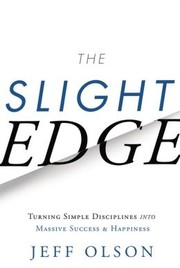
The Slight Edge by Jeff Olson book cover

★★★★½4.4/5

The verdict: One simple truth stretched to book length, but the truth is worth it.

🎧 Listen free on Audible
Try Kindle Unlimited
Buy the paperback

⚡ Quick answerThe Slight Edge by Jeff Olson gets 4.4/5 from me. One simple truth stretched to book length, but the truth is worth it. Anyone stuck in the discouraging early grind.

What is The Slight Edge about?

Olson's argument is that success is the sum of small, easy disciplines repeated daily, and that small, easy errors compound just as powerfully in the wrong direction. The choices are easy to do and just as easy not to do.

The Slight Edge summary

Olson's book rests on one observation: the actions that create success are simple, small and easy to do, which is exactly why they are also easy not to do. Reading ten pages, making one more call, saving a little each month; none of it is hard, and none of it feels significant on the day you do or skip it.

The power, he argues, is in the compounding. Small right choices stack into large results over time, and small wrong choices stack into failure just as reliably. The trap is that both curves look flat for a long time before they diverge, so most people abandon the good habits during the invisible stretch when nothing appears to be happening.

Much of the book is about building the philosophy to keep going through that flat period: seeing time as your ally, trusting the process, and understanding that consistency, not intensity, is what wins. It is less a set of tactics and more a way of looking at every ordinary daily choice.

Published in 2005 and steadily popular ever since, it became a staple recommendation in sales and network-marketing circles in particular. It is aimed at people stuck in the discouraging middle of a long effort, who need a reason to keep going before the results show up.

The one idea worth the price: Results always lag the effort. The flat stretch where nothing seems to work is the normal part, not the signal to stop.

Key ideas and takeaways

  • The compound effect. Tiny actions look pointless in the moment and decisive over time.
  • Easy to do, easy not to do. The actions that build success are never hard. That is exactly why most people skip them.
  • The plateau. Results lag effort and stay hidden for a long time before they show. Most people quit inside the gap.
  • Philosophy over tactics. It is less a method and more a way of seeing daily choices.

My honest take

This is the book for the discouraging middle, the stretch when you have been at it for months and nothing seems to be moving. It reframes that flat period as the normal, invisible part of compounding rather than proof that it is not working. I hand it to clients who are about to quit right before the curve finally kicks up.

It is repetitive, and you could get a chunk of it from a long article. But the repetition is arguably the point, because this is a message people need on a loop, not once. Sometimes the book you need is not the cleverest one, it is the one that keeps you going.

I keep this one for clients at a very specific moment: three to six months in, when the early excitement has gone and the results have not arrived yet. That is when most people walk, right before the curve turns up. This book is the argument for staying in the chair a little longer, and some days that argument beats any tactic.

The honest caveat: It is one idea padded to book length. If you want a density of new ideas, you will find it thin.

Where it falls short

  • It is genuinely one idea repeated, so anyone wanting density will find it thin.
  • The examples can feel simplistic, and it leans hard on motivation over method.

How it compares

Atomic Habits is the better book if you want a method; The Slight Edge is the one to reach for when you already know what to do and just need convincing to keep doing it. They are a natural pair.

Who should read it (and who should skip it)

Anyone stuck in the discouraging early grind. Skip it if you want variety and pace.

Best format: Audio. It works as a passive-listen pep talk you can replay when your resolve dips.

How to actually use it if you are self-employed

  • Pick one fifteen-minute daily discipline and commit to ninety days.
  • Track it somewhere you will see it every day.
  • Expect the flat stretch, and treat carrying on through it as the whole game.
⚡ The 60-second recap

  • Small easy actions compound, and so do small easy mistakes.
  • The flat stretch is normal; keep going.
  • Consistency beats intensity.
A book is a shortcut. A second pair of eyes is faster.

Twenty years self-employed, 500+ people coached. If you want help applying this to your own situation, book a free discovery call.

Book a free discovery call

Frequently asked questions

Is it like Atomic Habits?

Same family, different flavour. Atomic Habits is the practical system; The Slight Edge is the motivational philosophy behind sticking with one.

Is it repetitive?

Yes, deliberately so. The single idea is hammered home, which suits some readers and frustrates others.

Who is it best for?

People in the discouraging early phase who need a reason to keep going before results appear.

Is it worth it if I've read Atomic Habits?

They pair well. Atomic Habits gives you the method; The Slight Edge gives you the reason to stick with it.

How long is it?

Short and quick, and it works nicely as an audio listen you replay when motivation dips.

Final verdict

The Slight Edge earns 4.4/5. One simple truth stretched to book length, but the truth is worth it. If it is the stage you are at, the cheapest way in is a free Audible trial or Kindle Unlimited.

Note: Cover image via the Open Library Covers API. Rating is my own editorial score. Affiliate links are marked and support the site at no cost to you.
Publish reminder: set the featured image and meta description; confirm the /book-reviews/ category is assigned.