

A Rework review and summary: Jason Fried and DHH bin conventional business advice, and most of what they replace it with holds up.
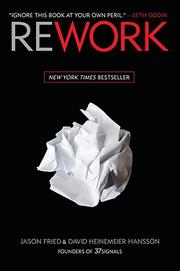
★★★★½4.5/5
The verdict: Short, blunt and refreshingly contrarian for anyone running lean.
🎧 Listen free on Audible
Try Kindle Unlimited
Buy the paperback
What is Rework about?
The Basecamp founders reject much of the received wisdom about how businesses should be run, arguing for simplicity, saying no, staying small and shipping real work over planning, meetings and growth for its own sake.
Rework summary
Rework is deliberately unlike a normal business book. It is a collection of short, punchy chapters, each making a single contrarian point, with no filler between them. The founders of Basecamp draw on how they actually built a profitable software company without following the standard startup script.
The arguments come thick and fast. Planning is guessing, so stop obsessing over long plans. Meetings and interruptions are toxic to real work. You do not need outside funding, a big team or an office to succeed. Build half a product rather than a half-baked one. Say no by default. Underneath the provocations sits a consistent philosophy: keep things small, simple and focused on making something people will pay for.
Because each chapter is a page or two, you can read it in an afternoon or dip in and out. Not every point will fit your situation, but the cumulative effect is a useful shake-up of assumptions you probably did not know you were carrying.
Published in 2010 by the founders of Basecamp, it became a manifesto for the small, profitable, anti-hype software business. It is aimed at people who suspect the standard startup advice does not fit how they want to work.
Key ideas and takeaways
- Planning is guessing. Long plans are fiction. Decide as you go with real information.
- Say no by default. Protect focus by refusing most requests and features.
- Build less. Do half as much, but do it well, rather than piling on features.
- You need less than you think. No big team, funding or office required to build something real.
My honest take
For a team of one or a small operation, this is a genuine tonic. So much business advice assumes you want to raise money, hire fast and grow at all costs, and Rework calmly points out that none of that is compulsory.
The short-chapter format means you can read it in a sitting and keep coming back. Not every point applies to every business, and some are more provocation than instruction, but the overall effect is to give you permission to run things simply and ignore a lot of the noise. I recommend it often to people who feel they are doing it wrong because they are not following the startup playbook.
It sits nicely beside Company of One and The E-Myth, all three pushing back on the idea that bigger and more complicated is automatically better. Read together, they make a strong case for the deliberately small business.
Where it falls short
- A few points are provocations more than practical guidance.
- The confident tone glosses over how much easier some of this is once you are already successful.
How it compares
Company of One shares the stay-small philosophy but goes deeper on the why; Rework is the faster, blunter hit of the same spirit. Read Rework for the jolt and Jarvis for the fuller argument.
Who should read it (and who should skip it)
Solo operators and small teams tired of the grow-at-all-costs script. Skip it if you want detailed, step-by-step processes.
How to actually use it if you are self-employed
- Cancel or shorten one recurring meeting this week.
- Cut one feature or service that adds complexity without much return.
- Say no to the next request that does not fit your focus.
- Stop over-planning; decide as you go.
- Say no and build less, better.
- You need far less than the startup script claims.
Twenty years self-employed, 500+ people coached. If you want help applying this to your own situation, book a free discovery call.
Frequently asked questions
Is it only for tech companies?
It comes from software, but most of the advice about focus, planning and saying no applies broadly.
Is it a quick read?
Very. Short chapters mean you can finish it in an afternoon or dip in and out.
Is the advice practical?
Mostly, though some points are provocations. Take what fits your situation.
Do I need to read it in order?
No. The short, self-contained chapters make it easy to jump around.
Is it still relevant?
Yes. The push for simplicity and focus has arguably aged better than the growth-at-all-costs advice it argues against.
Final verdict
Rework earns 4.5/5. Short, blunt and refreshingly contrarian for anyone running lean. If it is the stage you are at, the cheapest way in is a free Audible trial or Kindle Unlimited.
Publish reminder: set the featured image and meta description; confirm the /book-reviews/ category is assigned.
Discover more from Alan Spicer - YouTube Certified Expert
Subscribe to get the latest posts sent to your email.


