

An Indistractable review and summary: Nir Eyal’s argument that distraction starts inside you, and his four-step plan for doing what you say you will do.
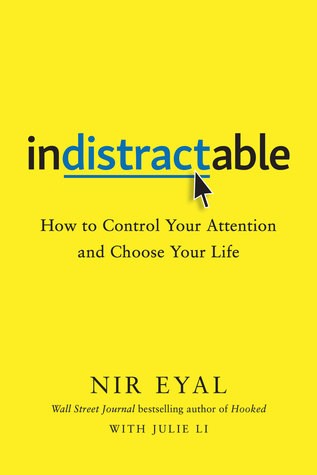
Nir Eyal’s first book, Hooked, taught companies how to build habit-forming products. His second turns the tables and teaches you how to resist them. The surprise is where he says the problem starts: the uncomfortable feelings that make your phone look tempting in the first place.
★★★★½4.5/5
My verdict: The most practical book on distraction I have read, written by the man who explained how apps hook us.
The cheapest way to read it is free: start an Audible trial and use your credit on this one.
Listen free with an Audible trialTry Kindle Unlimited freeSee it on Amazon UK
Best format: Kindle or paperback. The book is built around exercises and tools you will want to come back to, so a highlightable copy pays off.
Why listen to me? I have been self-employed for 20 years (side hustler, then solopreneur, now business owner), I have coached 500+ creators and business owners, and I get through most of my business reading as audiobooks on dog walks. I review books for one reason: to tell you whether this one earns a place in your week. Read client results.
Jump to:
⚡ QUICK ANSWER: Indistractable by Nir Eyal gets 4.5/5 from me. It argues that distraction is a way of escaping discomfort, then gives a four-part plan: master internal triggers, make time for traction, hack back external triggers and prevent distraction with pacts. It suits self-employed people whose focus keeps leaking into their phones.
What Indistractable is about
Nir Eyal is a behavioural design writer best known for Hooked, his book on how technology companies build products we keep coming back to. Indistractable, published in 2019, is his answer to the question readers kept asking him: how do I stop being hooked myself?
His central claim is that technology is not the root cause of distraction. Distraction is a way of avoiding uncomfortable feelings such as boredom, anxiety or uncertainty. Your phone is simply the most convenient escape hatch. Fix your relationship with those feelings, plan your time properly and only then start removing external temptations.
Indistractable summary
Eyal defines traction as any action that moves you towards what you planned to do, and distraction as any action that pulls you away. The key word is planned: checking social media is not a distraction if you scheduled it, and answering email can be one if it was not in the plan.
Part one, master internal triggers, is the heart of the book. He suggests noticing the feeling that comes just before you reach for a distraction, writing it down and getting curious about it rather than acting on it. His ten-minute rule helps here: when you feel the urge, wait ten minutes before giving in, and often the urge passes.
Part two, make time for traction, is about timeboxing. You cannot call something a distraction unless you know what you were supposed to be doing, so Eyal recommends planning your week in blocks based on your values, covering yourself, your relationships and your work. Part three, hack back external triggers, goes through the pings, meetings, email and group chats that interrupt you, and how to tame each one.
Part four, prevent distraction with pacts, covers precommitment. Effort pacts make distraction harder, price pacts make it cost you money, and identity pacts tie the behaviour to who you are. The book finishes with chapters on making workplaces less distracting and raising children who manage their own attention.
The one idea worth the price: Distraction is how you escape discomfort. Learn to sit with the feeling and most of the pull disappears.
Key ideas and takeaways
Traction versus distraction
The opposite of distraction is traction, not focus. That reframe is freeing for self-employed people: scrolling during a planned break is fine, while checking email in the middle of a client project is the real problem.
You cannot be distracted without a plan
If your day has no timebox, everything competes on equal terms and the easiest thing wins. A calendar based on what you want to do gives every hour a job.
Internal triggers come first
Before you blame the app, notice the boredom or worry that sent you to it. Naming the feeling weakens it, and the ten-minute rule gives you space to decide rather than react.
Pacts close the gap
When the plan is not enough, make the escape harder, more expensive or out of character. A website blocker is an effort pact; telling a friend you will pay them if you miss a deadline is a price pact.
My honest take
Indistractable is the book I recommend most often to coaching clients who say they cannot focus. It does not lecture you about phones; it asks why you reach for them, which is the more useful question.
For anyone self-employed, the timeboxing section is the part that changes the week. When I audit how solo business owners spend their days, the biggest leak is rarely one app. It is the absence of a plan, so every request and notification gets treated as equally urgent.
I also like that Eyal is honest about his own history. The man who wrote the manual on habit-forming products admits he was hooked too, and that gives the advice more weight than a book written from a monastery.
If your focus issues go hand in hand with a brain that loves novelty, my ADHD 2.0 review covers the other side of the coin, and the goals guide shows how I plan weeks around the same ideas.
Losing hours to distraction in your own business?
Books compress experience; coaching speeds it up. I have spent 20 years self-employed and coached 500+ people through the same problems this book tackles. A free call is a fast way to turn what you read into a plan for your week.
- You have read the books but nothing has changed yet
- You are working long hours without much to show for it
- You want a second pair of eyes on your business or channel
Where it falls short
Some readers find the internal-trigger advice a little thin given how central it is. Noticing and naming feelings helps, but if distraction is tied to something heavier, such as anxiety, a book will only go so far.
The later chapters on workplaces and parenting are useful but less relevant to solo business owners. You can skim them without losing much.
The honest caveat: If constant distraction feels tied to stress or low mood, the book is a starting point, not a replacement for proper support.
How it compares
Cal Newport’s Deep Work is the other big focus book, and the two take different routes to the same goal.
| Indistractable | Deep Work | |
|---|---|---|
| Core idea | Distraction is escape from discomfort | Focused work is rare and valuable |
| Main tool | Timeboxing and pacts | Deep work blocks and rituals |
| Tone | Practical and forgiving | Demanding and a little purist |
| Best for | People who keep getting pulled away | People who need long creative stretches |
Read Indistractable to stop the leaks and Deep Work to decide what to do with the time you win back.
Who should read it (and who should skip it)
Read it if you plan to work on something and find yourself on your phone ten minutes later, or your days disappear into email and messages.
Skip it if you already timebox your week and have strong focus habits. You will find the core ideas familiar.
How I would use it if you are self-employed
- I would write down the feeling every time I reach for my phone during work for one week, then look for the pattern.
- I would timebox next week in full, including breaks and social media, so I know what traction looks like.
- I would turn off every non-essential notification and batch email into two set windows a day.
- I would make one effort pact (a blocker on my worst website during focus blocks) and one price pact with a friend.
People also read
If Indistractable lands for you, these are the reviews readers open next.
People also ask
What is the main message of Indistractable?
That distraction comes from inside us. We reach for distractions to escape uncomfortable feelings, so the first step is learning to manage those feelings, followed by planning our time and only then removing outside temptations.
What is the 10-minute rule in Indistractable?
When you feel the urge to give in to a distraction, wait ten minutes first. The pause lets the craving peak and pass, and gives you time to decide rather than react.
Is Indistractable anti-technology?
No. Eyal argues that technology is a convenient escape rather than the root cause, and that planned use of apps and social media is perfectly fine. The problem is unplanned use that pulls you away from what you meant to do.
Frequently asked questions
Is Indistractable worth reading?
Yes, if distraction is costing you time. It is one of the most practical books on focus, with clear exercises you can apply the same day. It is especially useful for self-employed people who have no outside structure to keep them on task.
What are the four parts of Indistractable?
Master internal triggers, make time for traction, hack back external triggers and prevent distraction with pacts. The order matters: Eyal argues you should start with your own feelings and your plan before blocking apps.
What is the difference between traction and distraction?
Traction is any action that moves you towards what you planned to do. Distraction is any action that pulls you away from it. Whether something counts as a distraction depends on your plan, not on the activity itself.
Who is Nir Eyal?
Nir Eyal is a writer and former lecturer on behavioural design. His first book, Hooked, explained how companies build habit-forming products, and Indistractable shows readers how to resist them.
Is Indistractable better than Deep Work?
They suit different needs. Indistractable is better if you keep getting pulled away from your plans, while Deep Work is better if you need long stretches of intense concentration. Many readers benefit from both.
What are pacts in Indistractable?
Precommitments that make distraction harder. Effort pacts add friction, price pacts attach a cost, and identity pacts link the behaviour to who you see yourself as, such as calling yourself someone who does not check email before lunch.
Final verdict
Indistractable earns 4.5/5 from me. It is practical, forgiving and honest about why we get distracted, and the timeboxing advice alone can give a self-employed person back several hours a week. The cheapest way in is a free Audible trial (your credit covers this book and it is yours to keep) or a Kindle Unlimited free trial. Prefer paper? Find it on Amazon UK.
About the author: Alan Spicer is a UK-based YouTube Certified Expert (since 2017), self-employed for 20 years, with six YouTube Silver Play Buttons and 500+ creators coached. He has grown channels including Coin Bureau Trading and Woof & Joy, and reviews the books that shaped how he runs a solo business. Fuelled by tea.
Related reading
Want the shortcut from reading to results?
I am a YouTube Certified Expert with 20 years of self-employment behind me, six Silver Play Buttons and 500+ people coached. Bring your goals to a free discovery call and leave with next steps.
Disclosure: some links in this review are affiliate links (Amazon, Audible and Kindle Unlimited). If you sign up or buy through them I may earn a commission at no extra cost to you. Free trial lengths and terms are set by Amazon and Audible, so check current terms before you sign up. Star ratings are my own editorial scores.
Discover more from Alan Spicer - YouTube Certified Expert
Subscribe to get the latest posts sent to your email.


