Categories
BOOK REVIEWS

The 7 Habits of Highly Effective People Review and Summary

A 7 Habits of Highly Effective People review and summary: why Covey's slow-burn classic still beats most modern productivity books on substance.
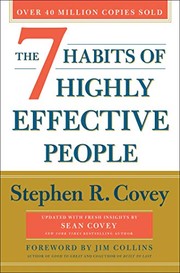
The 7 Habits of Highly Effective People by Stephen R. Covey book cover

★★★★½4.6/5

The verdict: Dated on the surface, timeless underneath.

🎧 Listen free on Audible
Try Kindle Unlimited
Buy the paperback

⚡ Quick answerThe 7 Habits of Highly Effective People by Stephen R. Covey gets 4.6/5 from me. Dated on the surface, timeless underneath. Anyone who wants principles that outlast trends.

What is The 7 Habits of Highly Effective People about?

Covey builds from private victory (be proactive, begin with the end in mind, put first things first) to public victory (win-win, seek first to understand, synergise) and finishes with renewal (sharpen the saw). It is a principles book, not a hacks book.

The 7 Habits of Highly Effective People summary

Covey organises the book as a progression, not a checklist. The first three habits cover what he calls private victory, the work you do on yourself. Be proactive, which means owning your responses and focusing on what you can influence. Begin with the end in mind, which means defining success before you chase it. And put first things first, using his famous matrix to protect what is important from the tyranny of what is merely urgent.

The next three habits move to public victory, how you work with others. Think win-win rather than treating every deal as one winner and one loser. Seek first to understand, then to be understood, which is really just listening properly before you make your case. And synergise, where good collaboration produces more than the sum of its parts.

The seventh habit, sharpen the saw, wraps around all of them: renew yourself physically, mentally, socially and spiritually, or the other six degrade over time. It is a book about character and principles rather than quick wins, which is its weakness for impatient readers and its strength for anyone who wants something that lasts.

First published in 1989, it has sold tens of millions of copies and shaped decades of leadership training. It is aimed at people who want a durable framework for effectiveness rather than a bag of tricks, and it rewards patience in a way few modern books ask for.

The one idea worth the price: Pour your energy into your circle of influence and starve your circle of concern. Most of your stress lives in the gap between the two.

Key ideas and takeaways

  • Circle of influence. Spend your energy on what you can affect and stop bleeding it on what you cannot. For the self-employed, worry is a daily tax and this is the cure.
  • Begin with the end in mind. Decide what the finished thing looks like before you start moving.
  • The time-management matrix. Urgent and important are not the same. Most people drown in urgent and neglect important.
  • Sharpen the saw. Maintain the person doing the work, or the work degrades.

My honest take

I resisted this for years because it looked like corporate-training wallpaper. I was wrong. The circle of influence idea alone is worth the whole book for anyone self-employed, where it is easy to spend all day worrying about clients, algorithms and the economy, none of which you control on a Tuesday afternoon.

It reads slower than modern books and you have to mine it a little, but the substance underneath is deeper than most of what has followed. This is a book you keep and reread at different stages, getting something new each time.

For someone self-employed, the win-win habit quietly reshapes how you price and negotiate. Once you stop treating every client conversation as a fight to win, you strike better deals and keep clients longer. That one shift has probably earned me more than any tactic in a flashier book.

The honest caveat: The prose is heavy and the examples are of their era. You have to do a bit of digging to get to the gold, and impatient readers bounce off it.

Where it falls short

  • The writing is dense and dated, and you have to work to extract the value.
  • It is pitched at a corporate and family audience, so you translate some of it to a solo context yourself.

How it compares

Where most productivity books hand you tactics, Covey hands you the principles sitting underneath them. Pair it with The One Thing if you want the sharp, practical counterpart to Covey's slower, deeper approach.

Who should read it (and who should skip it)

Anyone who wants principles that outlast trends. Skip it if you want a quick tactical hit today.

Best format: Kindle or paperback. This is one to underline and revisit, not a passive listen.

How to actually use it if you are self-employed

  • Draw your circle of influence and consciously drop one worry that sits outside it.
  • Write a one-line mission for your business you can actually remember.
  • Block a weekly slot for important-but-not-urgent work before the urgent floods in.
⚡ The 60-second recap

  • Own your responses; work your circle of influence.
  • Protect important-but-not-urgent work every week.
  • Renew yourself or the good habits decay.
A book is a shortcut. A second pair of eyes is faster.

Twenty years self-employed, 500+ people coached. If you want help applying this to your own situation, book a free discovery call.

Book a free discovery call

Frequently asked questions

Is it still relevant?

More than most books its age. The principles are about human behaviour, which has not changed, even if the examples have.

Which habit matters most for the self-employed?

The circle of influence idea inside be proactive. It stops you wasting energy on things you cannot change.

Is it a hard read?

Slower than modern books, yes. Treat it as a mine, not a sprint, and it pays out.

Is a summary enough, or do I need the full book?

The matrix and the circle of influence you can grasp from a summary, but the depth on character rewards the full read.

Where should a beginner start?

Habits one to three. Get proactive, define your end goal, and protect your priorities first.

Final verdict

The 7 Habits of Highly Effective People earns 4.6/5. Dated on the surface, timeless underneath. If it is the stage you are at, the cheapest way in is a free Audible trial or Kindle Unlimited.

Note: Cover image via the Open Library Covers API. Rating is my own editorial score. Affiliate links are marked and support the site at no cost to you.
Publish reminder: set the featured image and meta description; confirm the /book-reviews/ category is assigned.
Categories
PODCAST

We Never Stop Learning – Life Is Non Stop Self Improvement #STARTCREATINGPODCAST (ep015)

The older I get the more I realise that life is a non stop opportunity to learn more about the world. In fact the older you get the more knowledge is forced into your head even if you wasn’t looking to learn something new. Now I am not suggesting that you just lock yourself a way in a cave with only pot noodles and an xbox for company to avoid learning more… embrace then knowledge.

I have learnt more about the world, myself, business and the inner workings of other peoples lives than I ever learnt from school or the education system. And what helped me learn so much… simply living. I can now appreciate how much my mum must’ve done for me when I was a little kid now that I have a step daughter of my own. All those late nights, middle of the night wake up calls. All those times she had to bite her tongue or fight the urge to slap me in the head for asking the same stupid question or doing the same thing i’ve been told not to do 1Million times. You learn by proxy that life wasn’t truly the way you thought it was when you was young, in your teens or even then getting your first job.

Now education doesn’t have to come from living the patterns of life but can also come from expanding your bubble of knowledge. The more I learn, the move services I am able to offer my clients. When I first started my YouTube channel I was hoping to educate people via videos to grow their channel. I soon learned that I could also teach people 1 on 1 with reports and video calls. I learnt how to edit my videos better for clients which led to more clients wanting to work with me. Maybe you can see the cycle… even time a client asks me to learn something new, or I have to learn something to make something work… it becomes an asset and a skill I can add to my tool kit.

Even this podcast was a lesson that I felt I was forced to learn – not in a bad way. I need to expand my brand and make it easier for people to find me. If its easier for you to listen to me on a podcast rather than a Youtube video, then I would be silly to shut you out and ignore your need. So, I learnt how to make podcasts and 15 weeks in… I am now making podcast for my clients…. a lesson that was very quickly and toolkit asset worth my time and money.

Learning doesn’t have to have an ROI of money – But if you do embrace the learning that life throws at you, you’ll never be bored.

Why You Should Continue Learning

Beyond keeping things fresh to sustain your professional creativity and passion, learning keeps you relevant in our ever-changing world. And, it’s arguably the best job security tool you could have, not to mention that achieving higher levels and honing new skills is a great argument for seeking promotions and raises at work.

“Organizations can’t keep transforming if their employees aren’t learning and their skills aren’t aligned with shifting business demands,” explains Toby, stressing the importance of creating an environment in which learning is encouraged and failure is safe as long as employees learn from it.

“All managers should make learning a core goal for their employees. It’s directly related to their team’s and their company’s success,” he says. “Employees should get the time and support to achieve learning–and be recognized for it.”

His best advice for professional development? Take personal responsibility for your learning.

So, now that you know why you should continue to learn, here are Toby’s top tips for doing so on the job.

Decide What You Want to Learn

First, consider how and in what way you want to develop yourself.

Start with broad industry knowledge, which can help you pinpoint areas that most spark your curiosity. Read broadly and often. Your reading list should go beyond regular news. Follow both general business news, like the Harvard Business Review, as well as blogs related to your field. You can also join virtual communities related to your field to read and participate in discussions with your peers.

Try to work in at least half an hour of reading and professional networking each day. As specific topics in your field inspire and interest you, explore them further. Once you identify where you want to specialize, try to attend relevant conferences and even take specific courses to further your knowledge.

Take Full Advantage of Your Company’s Resources

Companies with the most effective continuous learning programs make their resources accessible, personalized, and engaging for employees. Take IBM’s Your Learning platform as an example. Powered with Watson’s artificial intelligence analytics, Your Learning integrates formal, informal and social learning formats and curates content for each individual learner. This Netflix-style development platform offers employees a set of channels to choose from. Employees can see how others have rated the various offerings and there’s also a live-chat adviser, who is available to help them at any time.

And, employees earn digital badges based on the level of expertise and experience in specific skills they have completed, which is a great way to empower employees, keep them engaged, and perpetuate the culture of learning.

“When you’re allowed to influence your training in this way, following your own interests and even adding material you find on your own, the learning experience is irresistible. You can gain control, create your own learning pathways and develop your skills in a faster and more efficient way,” Toby explains. Customization is something the IBM Learning platform offers by getting to know you as a learner and providing personalized learning recommendations based on not only your job role, but your learning patterns and personal interests.

To get started, do some research and ask around. If you’re new to an organization, there may be a learning portal you aren’t familiar with yet. And even if you’ve been somewhere for years, policies may have changed and there could be budget available for online courses or conferences.

Once you’ve dug around a bit, check in with your manager and HR about the resources that are available and how you can best fit this into your regular work schedule. It’s not uncommon for organizations to allow employees to make time for professional development during the workweek. 

Ask for More Learning Opportunities at Work

But, if you’re left wanting more when it comes to professional development resources at work, don’t let that deter you, Toby advises. When asked how employees can push for more learning options, he suggests starting by demonstrating how it will help your company.

“Have a vision of what your organization wants to look like, and show how employee learning fits into that,” he explains. Companies must recognize that the environment is constantly changing, he says, and that their responsibility to clients to stay up-to-date and relevant with the latest knowledge and tools can be best met by empowering their own employees to keep learning.

If your company doesn’t offer an accessible internal learning platform or have the resources to create one, Toby suggests employees lead the charge by requesting access to readily available external training and learning services.

“Be curious,” he says. “Go on forums, watch TEDx, be active in LinkedIn communities. And within your day to day, remember that learning happens everywhere. Reach out to your peers and communities both within and outside of your organization,” Toby says. “Continue to stay curious and find the way to always be learning.”

And make your own suggestions. If there is a professor from a local university that is an expert in a topic you want to learn more about, see if your company will organize a lunch and learn session with him. Be vocal about what you’re interested in, and suggest ways to make it happen.


So, take a proactive approach when it comes to your education. And remember, learning can happen in many different ways. Don’t discount what you can get out of a podcast on a favorite subject, or email digest focused on your industry. The important thing is you’re soaking up the knowledge, and using it to better yourself and your career.

Categories
TIPS & TRICKS VIDEO YOUTUBE

STOP Comparing Yourself With Others – How To Grow On YouTube – #RANT

STOP Comparing Yourself With Others — How To Grow On YouTube — #RANT // Personal development and other self help can be tied to YouTube channel growth. Comparing yourself to others can get toxic, comparing yourself to others can be counterproductive and can lead to stress or burn out.

YouTube is a huge beast and every youtuber is different. Your age, your location, your age, you sense of humour, your content, your demographic, your thumbnails… the list is endless.

All of these differences can have a small or a large effect on your channels growth and your audience. Comparing yourself to rivals or larger youtubers can lead to improper comparison and can lead to you feeling like you are under achieving.

Maybe you need to level up you website game? Maybe you neglected your site and need an update like smm-th.com

ONLY COMPARE YOURSELF TO YOURSELF — The only personal you should be competing with is yourself. Look at yourself last week, last month, last year and see how you can improve to beat that. beat yourself 52 weeks in a row and you’ll be 52x better than you was a year ago.

GO OUT THERE, & START CREATING!
